Esports Talent Agencies: Inside Multi-Million Pro Deals
During the foundational years of competitive video gaming, professional contracts were informal, unregulated, and precarious. Teenagers and young adults competing in early LAN tournaments often signed handwritten agreements on hotel stationery, received compensation in computer hardware or energy drinks, and competed for modest prize pools handed out in cash or paper checks. Players possessed virtually zero legal representation, leaving them vulnerable to predatory team owners, unfulfilled prize distributions, and restrictive, multi-year lock-in clauses that could derail promising athletic careers.
However, as competitive gaming evolved into a global, multi-billion-dollar entertainment industry, the nature of athlete representation underwent an institutional transformation: The Rise of Dedicated Esports Talent Agencies.
Today, premier esports athletes and gaming creators are represented by global talent powerhouses—including legacy Hollywood agencies like Creative Artists Agency (CAA), United Talent Agency (UTA), and William Morris Endeavor (WME), alongside specialized, digital-native representation firms like Loaded, Prodigy Agency, and Evolved.
Continues after advertising
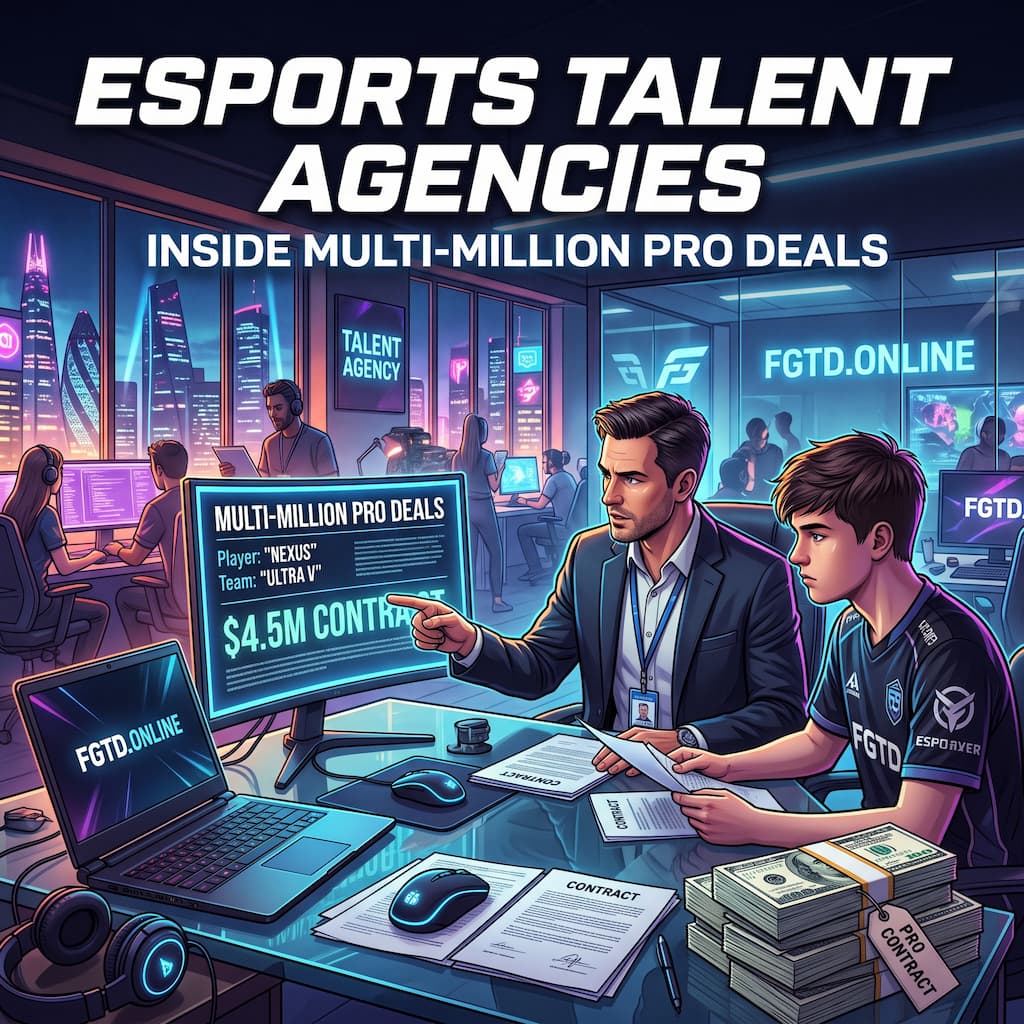
These agencies negotiate complex, eight-figure contracts spanning base player salaries, live-streaming exclusivity platforms, global apparel endorsements, equity stakes in gaming organizations, and digital intellectual property (IP) licensing.
What was once an unregulated digital subculture has transformed into a high-stakes corporate arena where specialized agents protect, monetize, and scale the human capital powering modern interactive entertainment.
This post analyzes the structural evolution of esports talent representation, breaks down the anatomy of modern multi-million-dollar professional deals, compares legacy sports contracts with digital gaming contracts, and explores how elite agencies shape the commercial future of professional digital athletes.
1. The Professionalization Crucible: Why Esports Needed Modern Representation
To understand why specialized talent agencies have become indispensable, one must examine the legal and commercial vulnerabilities that defined the early days of competitive gaming.
The Era of Predatory Contracting
In the 2010s, as venture capital flooded into newly formed esports leagues (such as Riot Games’ League of Legends Championship Series and the Overwatch League), team valuations skyrocketed into the tens of millions of dollars. However, the legal maturity of the player ecosystem lagged behind:
- Young athletes, often between the ages of 16 and 20, signed complex 40-page employment contracts without independent legal counsel.
- Organizations frequently inserted punitive buyout clauses—sometimes exceeding millions of dollars—that kept benched players trapped on rosters without the ability to seek transfers or negotiate with rival teams.
- Many early contracts seized 50% to 100% of a player’s personal streaming revenue, personal sponsorship earnings, and in-game sticker royalties.
The Explosion of Player Earning Power
As streaming platforms like Twitch, YouTube Gaming, and Kick grew into primary media distribution networks, the economic value of an elite player decoupled from competitive prize money alone:
- A top-tier competitive star in Valorant, Counter-Strike, or League of Legends was no longer just an athlete; they were an influential media brand with millions of engaged social followers.
- Managing corporate sponsorship solicitations, multi-jurisdictional tax obligations, immigration visas for international tournaments, and media rights required specialized, full-service representation.
Esports talent agencies stepped into this structural vacuum, acting as financial strategists, legal guardians, and commercial architects.
2. Anatomy of an Eight-Figure Esports Package: The Revenue Stack
A modern multi-million-dollar contract secured by an elite esports talent agency is rarely a simple base-salary agreement. It is an intricate, multi-layered commercial portfolio combining several distinct revenue streams:
Guaranteed Base Salary and Team Retainers
In franchised and tier-one leagues, star players command substantial guaranteed base salaries:
- Guaranteed competitive salaries for top-tier global stars range from $300,000 to over $1.5 million annually, paid by the esports organization regardless of tournament placements.
- Talent agents structure these agreements with performance escalation bonuses, milestone incentives for international championship qualifications, and clear severance protections in the event of team restructuring.
In-Game Digital Monetization & Skin Revenue Sharing
One of the most lucrative revenue engines in gaming is direct digital cosmetics:
- In titles like Counter-Strike and Valorant, tournament organizers release commemorative digital team capsules, player autograph stickers, and weapon skins.
- Multi-million-dollar revenue pools generated from these microtransactions are distributed to teams and players.
- Skilled talent agents negotiate contract terms that guarantee players receive the majority of their individual digital signature revenue, ensuring that virtual in-game item sales yield substantial, recurring dividends.
Platform Exclusivity and Content Streaming Pacts
For top-tier competitors who maintain massive personal broadcast audiences, agencies negotiate standalone live-streaming contracts:
- Independent of team salaries, streaming platforms compete aggressively for exclusive broadcast hours, offering multi-million-dollar annual guarantees to lock talent into specific services.
- Agents balance minimum monthly broadcast hour obligations against rigorous team practice schedules, preventing physical burnout and competitive interference.
Non-Endemic Corporate Endorsements
Historically, gaming sponsorships were limited to peripheral hardware manufacturers (keyboards, headsets, energy drinks, and gaming chairs).
Today, premier talent agencies bring non-endemic, global luxury brands directly to esports talent:
- Star competitors secure brand ambassador roles with automotive giants (BMW, Mercedes-Benz), luxury fashion ateliers (Gucci, Louis Vuitton), telecommunication conglomerates, and international consumer electronics brands.
- These commercial deals often dwarf tournament prize money, generating millions in high-margin sponsorship fees.
3. Structural Comparison: Traditional Athletic Representation vs. Esports Talent Management
Evaluating the operational, legal, and commercial dimensions that separate traditional sports agents from esports talent representatives highlights the unique technological landscape of competitive gaming:
Primary Commercial Revenue Foundation
- Traditional Athletic Representation (NFL, NBA, Premier League): Player league employment contracts, traditional television advertising, footwear contracts, and local public appearances.
- Esports Talent Management: Hybrid portfolio spanning team employment salaries, digital streaming platform retainers, in-game virtual item royalties, and native creator content sponsorships.
Intellectual Property & Image Rights Control
- Traditional Athletic Representation: Highly centralized; league collective bargaining agreements (CBAs) dictate broad broadcast rights, uniform licensing, and video game likeness royalties.
- Esports Talent Management: Highly fractured and bespoke; agents must navigate complex publisher IP guidelines, negotiating custom likeness usage across YouTube, Twitch, custom apparel, and in-game digital assets.
Athlete Career Lifespan and Peak Age Curve
- Traditional Athletic Representation: Physical primes generally span ages 24 to 32; careers often extend 10 to 15 years with gradual physical decline.
- Esports Talent Management: Fast-twitch cognitive primes often peak between ages 18 and 24; shorter competitive windows require agents to aggressively monetize creator and streaming equity early to ensure long-term financial security.
Regulatory and Unionization Framework
- Traditional Athletic Representation: Strict certification standards (NFLPA, NBPA agent certifications); mandatory commission caps and standardized league-wide dispute resolution systems.
- Esports Talent Management: Emerging regulatory framework; operates primarily under commercial entertainment contract law without standardized player union collective bargaining, making agency legal acumen even more critical.
4. Contract Protections: Dismantling the Traps of Competitive Gaming
The true value of an elite esports agency lies as much in the terms they prevent as in the dollar figures they secure. Modern representation focuses heavily on athlete autonomy, mental health, and career longevity:
- Eliminating Restrictive Buyouts: Agents ensure contract buyouts decrease proportionally over the duration of the agreement, preventing organizations from keeping talented players sidelined in “contract jail” when trade opportunities emerge.
- Preserving Personal IP and Merchandising: Elite representation ensures players retain total ownership of their personal trademarks, logos, social media handles, and personal creator channels, preventing teams from claiming ownership over an athlete’s personal digital brand.
- Competitive Load and Schedule Management: Contracts now frequently include stipulations defining mandatory off-seasons, maximum daily practice scrim hours, and team commitments to mental health support, physical trainers, and sports psychologists.
5. The Creator Convergence: Transforming Competitors into Entertainment Franchises
The modern esports talent agency understands that competitive tournament success is fleeting. A patch balance update by a game publisher can alter the meta overnight, or an athlete’s reaction speeds can diminish with age.
To build sustainable, generational wealth, agencies focus on the Creator Convergence:
- Branching Beyond a Single Title: Agents transition professional players into variety content creators, lifestyle podcasters, and brand ambassadors whose audience follows them regardless of which specific video game is trending.
- Founding Proprietary Ventures: Agencies assist talent in launching their own consumer brands—including specialty coffee lines, performance clothing labels, and independent production studios—shifting athletes from hired brand endorsers to equity-owning founders.
- Post-Competitive Longevity: By establishing strong personal brands during competitive primes, players smoothly transition into broadcast commentary, team executive leadership, or ownership stakes within major esports franchises upon competitive retirement.
Read More👉 Doping in Esports: The Battle for Fair Mental Play
Conclusion: The Business Architects of Modern Digital Culture
The explosion of esports talent agencies is not a fleeting corporate development; it represents the structural coming of age of competitive gaming. The era when passionate teenagers navigated international corporate negotiations alone is permanently over, replaced by a sophisticated ecosystem of legal, financial, and marketing professionals.
By securing multi-million-dollar compensation structures, defending intellectual property rights, and converting fleeting competitive victories into enduring media enterprises, talent agencies ensure that the athletes who dedicate their lives to mastering digital sports receive their rightful share of the industry’s immense wealth.
As interactive entertainment expands, virtual worlds grow more immersive, and esports cements its status as the defining global sport for digital generations, elite representation firms will remain the vital architects behind the scenes—permanently establishing Esports Talent Agencies: Inside Multi-Million Pro Deals as the engine shaping the financial future of professional gaming.