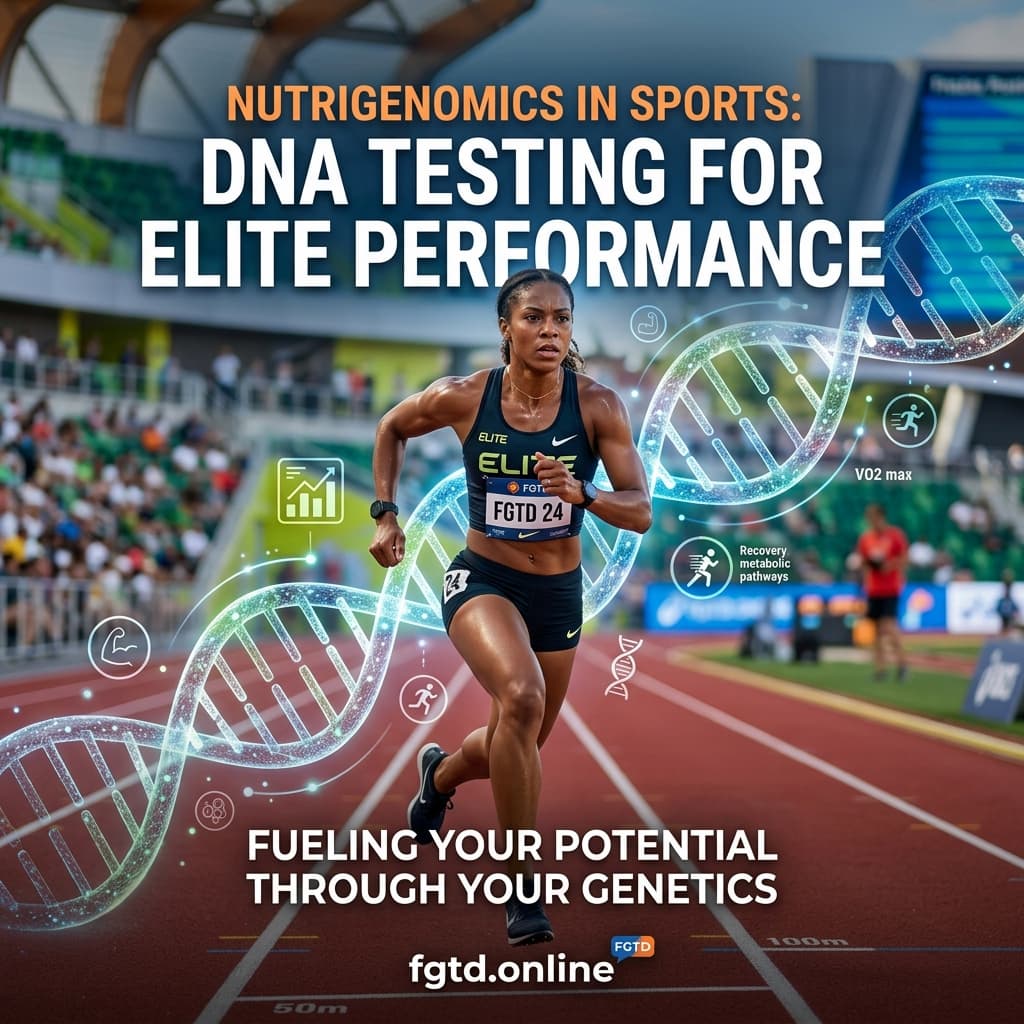
Nutrigenomics in Sports: DNA Testing for Elite Performance
For decades, the foundational doctrine of athletic preparation adhered to a uniform, empirical methodology. Strength and conditioning coaches designed macrocycles from standardized physiological charts, while sports dietitians distributed rigid nutritional plans based on generalized caloric targets, fixed macronutrient splits, and universal hydration rules. Athletes competing at the highest levels of global sport—from Olympic track champions to Premier League football players and grand tour cyclists—consumed virtually identical baseline combinations of complex carbohydrates, lean animal proteins, and synthetic multivitamin compounds.
Yet, sports scientists routinely encountered an unexplainable paradox: two elite competitors with identical body mass, training workloads, and dietary protocols often achieved completely disparate outcomes. One athlete thrived with rapid recovery, lean muscle accretion, and low inflammatory markers, while the other suffered chronic systemic inflammation, gastric distress, muscular fatigue, and recurring soft-tissue injuries.
The catalyst behind this performance variance is rooted in individual molecular biology: The Science of Sports Nutrigenomics and Athletic DNA Profiling.
Continues after advertising
Nutrigenomics investigates the dynamic, bidirectional interplay between specific genetic variations and nutritional compounds. Rather than treating food as simple fuel, nutrigenomic science views dietary intake as biochemical information that directly modulates gene expression, enzyme kinetics, receptor sensitivity, and cellular metabolic pathways.
By analyzing single-nucleotide polymorphisms (SNPs) across an athlete’s unique genome, elite performance teams can dismantle generic dietary dogmas and engineer bespoke nutritional blueprints calibrated precisely to individual molecular requirements.
What began as academic gene-sequencing research has rapidly evolved into an indispensable competitive weapon for elite sports franchises, private athletic performance institutes, and Olympic federations worldwide.
This post analyzes the molecular mechanics of sports nutrigenomics, examines the primary genetic polymorphisms dictating athletic nutrition, compares legacy dietary models against DNA-guided metabolic programming, and explores the systemic integration of genomic intelligence into elite athletic careers.
1. The Molecular Foundation: Decoding SNPs and Gene-Nutrient Crosstalk
To understand how nutrigenomics transforms athletic capacity, one must understand how subtle variations in the human genome alter nutrient metabolism at the cellular level.
The human genome contains over three billion base pairs of DNA. While human beings share roughly 99.9% of their genetic code, the remaining fraction of a percent contains millions of Single-Nucleotide Polymorphisms (SNPs)—microscopic variations where a single nucleotide base (adenine, thymine, cytosine, or guanine) is substituted within a DNA sequence.
When these variations occur within genes encoding metabolic enzymes, transport proteins, or cellular receptors, they alter how an organism processes dietary nutrients:
- Enzymatic Clearance Rates: A SNP can speed up or severely slow down the rate at which an enzyme breaks down substrates, transforming standard nutrients into performance bottlenecks or accelerating toxic metabolite clearance.
- Cellular Receptor Sensitivity: Genetic variations can modulate the binding affinity of nuclear receptors (such as PPARs or vitamin D receptors), altering the downstream transcription of structural proteins and metabolic enzymes.
- Epigenetic Modulation: Nutrients act as epigenetic switches. Bioactive dietary compounds (such as sulforaphane, resveratrol, polyphenols, and omega-3 fatty acids) directly influence histone acetylation and DNA methylation, turning protective anti-inflammatory pathways on or down-regulating catabolic cellular cascades.
2. The Core Genetic Biomarkers Driving Athletic Performance
In high-performance sports, genetic testing profiles target dozens of specific, clinically validated SNPs that directly dictate fuel utilization, recovery timelines, and structural resilience:
1. ACTN3 & ACE: Muscle Fiber Architecture and Fuel Preference
The ACTN3 gene codes for alpha-actinin-3, a structural protein found exclusively in fast-twitch (Type II) muscle fibers responsible for explosive power and sprinting capacity:
- The RR / RX Genotypes: Athletes carrying functional ACTN3 alleles produce active alpha-actinin-3, optimizing fast-twitch contraction speed and glycolytic power output. These competitors thrive on higher immediate carbohydrate availability to fuel high-intensity anaerobic cycles.
- The XX Null Variant: Roughly 18% of the global population completely lacks the alpha-actinin-3 protein due to a homozygous premature stop codon. While these athletes demonstrate reduced peak sprint explosive power, they exhibit superior metabolic efficiency in slow-twitch muscle fibers, conserving glycogen more effectively and utilizing lipids at higher exercise intensities.
Coupled with the ACE (Angiotensin-Converting Enzyme) gene—which dictates vasodilation, blood pressure regulation, and skeletal muscle oxygenation—coaches calibrate whether an athlete’s cellular architecture is genetically optimized for rapid carbohydrate-dependent anaerobic bursts or fat-oxidized endurance work.
2. CYP1A2 & ADORA2A: The Ergogenic Kinetics of Caffeine
Caffeine is one of the most widely consumed, clinically proven ergogenic aids in international sport, yet its performance benefits are intensely gene-dependent:
- CYP1A2 (AA Rapid Metabolizers): The CYP1A2 gene encodes the liver enzyme responsible for clearing over 95% of ingested caffeine. Athletes with the AA genotype metabolize caffeine rapidly into active paraxanthine and theobromine, experiencing pronounced boosts in neuromuscular recruitment, endurance, and reaction speed without heart rate spikes.
- CYP1A2 (AC or CC Slow Metabolizers): Slow metabolizers clear caffeine sluggishly. For these athletes, high pre-competition caffeine doses leave parent caffeine circulating in plasma for extended periods, causing peripheral vasoconstriction, elevated resting blood pressure, elevated cortisol, increased tremors, and quantifiable decreases in performance.
- ADORA2A: Dictates the sensitivity of adenosine receptors in the central nervous system. Variants in ADORA2A predict whether caffeine consumption will cause sleep fragmentation, blunted deep-wave recovery, or pre-race anxiety.
3. FTO & PPARG: Macronutrient Partitioning and Lipid Oxidation
Weight-class combat athletes, gymnasts, and long-distance runners operate under extreme body-composition constraints:
- Polymorphisms in the FTO (Fat Mass and Obesity-Associated) gene and PPARG regulate appetite satiety signaling, lipid storage tendencies, and insulin sensitivity.
- Athletes carrying specific risk alleles exhibit heightened systemic insulin resistance and increased visceral fat accumulation when consuming diets rich in saturated fatty acids, requiring structured shifts toward monounsaturated fats and tightly timed, carbohydrate-partitioned feeding windows.
4. SOD2, GPX1, and GSTM1: Endogenous Antioxidant Defense and Recovery
Intense, near-maximal training bouts generate massive fluxes of reactive oxygen species (ROS) inside muscle mitochondria:
- While acute ROS signaling is necessary to stimulate mitochondrial biogenesis and muscular adaptation, uncontrolled oxidative stress damages cellular membranes and triggers prolonged muscle soreness (DOMS).
- Athletes harboring low-efficiency variants in SOD2 (Superoxide Dismutase 2) or deletions in GSTM1 produce lower concentrations of endogenous antioxidant enzymes.
- Rather than relying on generic synthetic vitamin pills—which can blunt training adaptations—these athletes require targeted dietary interventions using bioactive polyphenol compounds, tart cherry concentrates, and cruciferous sulforaphane sources to upregulate nuclear Nrf2 pathways naturally.
5. COL5A1: Tendon Tensile Strength and Collagen Synthesis
Soft-tissue injuries to ligaments and tendons represent the most financially destructive events in professional sports:
- The COL5A1 gene codes for the alpha-1 chain of type V collagen, a regulatory protein that governs the diameter and tensile strength of collagen fibrils in tendons and ligaments.
- Competitors with the TT genotype demonstrate superior mechanical tendon stiffness and sprint speed, but face significantly elevated risks of Achilles tendon ruptures, cruciate ligament sprains, and plantar fasciitis.
- Nutrigenomic protocols for these individuals mandate precise, timed supplementation with hydrolyzed collagen peptides, specific amino acids (glycine, proline, hydroxyproline), and vitamin C thirty to sixty minutes prior to mechanical loading to stimulate localized tenocyte collagen synthesis.
3. Structural Comparison: Conventional Sports Nutrition vs. Nutrigenomic Protocol Design
Evaluating the diagnostic, biochemical, and operational differences that separate traditional athletic nutrition from DNA-guided metabolic intervention illustrates why elite teams are adopting genomic science:
Diagnostic Input and Assessment
- Conventional Sports Nutrition: Relies primarily on subjective food recall logs, body weight scales, skinfold calipers, and generic RDA nutrient intake charts.
- Nutrigenomic Protocol Design: Integrates comprehensive genomic sequencing, targeted SNP mapping, blood biomarker panels, and continuous metabolic tracking.
Macronutrient Formulation Strategy
- Conventional Sports Nutrition: Universal macronutrient formulas applied across whole squads (e.g., standard 6-8 grams of carbohydrates per kilogram of body weight).
- Nutrigenomic Protocol Design: Hyper-individualized macronutrient ratios calibrated to PPARG, FTO, and ACTN3 profiles, balancing mitochondrial lipid oxidation capacity with glycolytic thresholds.
Micronutrient and Ergogenic Supplementation
- Conventional Sports Nutrition: Standardized team-wide supplement packs; indiscriminate distribution of mega-dose multivitamins, identical caffeine doses, and generic protein shakes.
- Nutrigenomic Protocol Design: Micro-calibrated nutrient targeting; caffeine dosing and timing mapped to CYP1A2 clearance kinetics; antioxidant interventions scaled to SOD2 and GSTM1 oxidative stress markers.
Injury Risk Mitigation and Structural Repair
- Conventional Sports Nutrition: Reactive medical care; post-injury icing, physical therapy, and generalized dietary advice after structural tears occur.
- Nutrigenomic Protocol Design: Proactive structural reinforcement; identifying COL5A1 connective-tissue risks before symptoms manifest and deploying targeted collagen-stimulating nutritional cycles around training sessions.
4. The Systemic Lifecycle: Implementing DNA Testing in Professional Organizations
Integrating nutrigenomics into a professional sports franchise requires a coordinated multidisciplinary approach:
- Initial Sequencing and Ethical Governance: Upon joining an organization, athletes undergo voluntary genetic screening via non-invasive buccal swabs or whole-blood samples. Stringent data-privacy protocols are enacted to ensure proprietary genomic data is protected from unauthorized commercial use or contract negotiations.
- Bioinformatics Integration: Raw genomic sequences are processed through specialized bioinformatics pipelines that cross-reference an athlete’s SNPs against peer-reviewed, replicated clinical studies—filtering out speculative correlations and highlighting actionable metabolic targets.
- Chef and Kitchen Execution: The performance dietitian translates raw genomic insights into culinary execution. Private team chefs prepare meals where carbohydrate sources, specific cooking fats, micronutrient densities, and functional spices are individualized down to the athlete’s specific plate.
- Dynamic Epigenetic Monitoring: DNA testing provides a static biological blueprint, but gene expression is dynamic. Performance teams pair baseline genomic data with quarterly blood biomarker panels, continuous glucose monitors (CGMs), and daily heart rate variability (HRV) metrics to track how dietary changes affect real-time physiological recovery.
5. Challenges, Limitations, and the Scientific Frontier
While nutrigenomics provides unprecedented physiological insights, sports scientists navigate clear boundaries to prevent oversimplification:
- Polygenic Complexity: Very few athletic traits are dictated by a single gene. Physical performance, endurance, and metabolic recovery are polygenic—governed by hundreds of interacting genes alongside environmental training loads, psychological stress, and sleep hygiene.
- Scientific Rigor vs. Commercial Hype: The proliferation of direct-to-consumer DNA test kits has introduced unverified marketing claims into the fitness industry. Elite practitioners focus exclusively on high-confidence, replicated SNPs backed by robust human clinical trials.
- The Epigenetic Horizon: The next frontier of sports nutrigenomics involves real-time transcriptomics and metabolomics—measuring active RNA expression and metabolic byproducts in sweat and interstitial fluid to adjust nutritional intake intra-race and intra-match.
Read More👉 Smart Golf Tech: The Luxury Boom in Home Simulators
Conclusion: The Era of Molecular Precision Athletics
Sports nutrigenomics is not a speculative wellness trend; it is the natural, inevitable evolution of athletic performance science. The legacy era of treating elite human bodies as identical biological engines driven by generic dietary guidelines is fundamentally obsolete.
By decoding an athlete’s unique genetic architecture, performance directors and sports scientists have unlocked the ability to speak directly to the genome through nutrition.
From optimizing caffeine kinetics and carbohydrate utilization to fortifying vulnerable tendons and accelerating systemic cellular repair, nutrigenomics bridges the critical gap between genetic potential and peak athletic execution.
As genomic sequencing technology becomes faster, more accessible, and deeply integrated with real-time biometric sensors worldwide, molecular personalization will become the universal benchmark across professional athletics—permanently establishing Nutrigenomics in Sports: DNA Testing for Elite Performance as the gold standard of elite sports conditioning.