Climate Change vs. Sports: The Battle for the Future
The global landscape of sports entertainment, athletic stadium construction, international event scheduling, and institutional asset allocation is confronting a severe environmental transformation. For over a century, the financial and operational architectures governing professional leagues, youth academy development, and massive global tournaments functioned within a highly predictable climatic envelope. Industrial sports engineering took seasonal weather baselines for granted. Organizers scheduled winter events around guaranteed sub-zero thresholds, mapped summer championships across manageable heat indexes, and built multi-million-dollar arena infrastructures under predictable environmental conditions.
Today, that stable environmental foundation has met a definitive, accelerating disruption.
Global climate change is no longer a distant theoretical variable or a lagging metric for future corporate social responsibility reports. It has evolved into an active, structural threat to the daily survival, athlete safety, and physical infrastructure of the modern sports ecosystem. Tectonic shifts in global temperature profiles, volatile extreme weather anomalies, and altering precipitation regimes are actively reshaping how sports organizations, global broadcast syndicates, and real estate asset classes capture and protect long-term enterprise value.
Continues after advertising
Relying on traditional point-in-time contingency plans, localized weather forecasts, or trailing historical climate records introduces massive operational vulnerabilities for sports fund managers and enterprise planners. Slow-moving, reactive administrative loops leave global sports properties completely exposed to immediate event cancellations, catastrophic facility damage from flash flooding, and severe liability exposure from heat-induced athlete injuries. This tracking latency results in immediate structural capital leakage, massive event insurance contract triggers, and lost broadcast syndication revenue that directly erodes career trajectories and corporate market confidence.
To eliminate this operational friction, minimize cash-drag leakage from unhedged climate events, and establish an unassailable infrastructure perimeter, progressive systematic sports executives are overhauling their operational frameworks. They are abandoning ad-hoc transactional emergency strategies and embedding an integrated Intelligent Climate-Risk Adaptation, Real-Time Biometric Security, and Spatial Asset Optimization Plane directly into the core matrix of their operational governance.
Far from an abstract environmental theme or a short-term public relations patch, constructing a production-grade climate defense infrastructure combines high-throughput multi-source atmospheric telemetry ingestion, non-linear stochastic asset-liability simulation networks, software-defined Policy-as-Code scheduling constraints, and hardware-insulated confidential data processing perimeters straight into the core matrix of global network properties like fgtd.online.
1. The Core Paradigm Shift: From Reactive Cancellations to Predictive Climate Adaptation
To forge a highly resilient media, facility, and athletic investment framework capable of maximizing operational yields safely across volatile atmospheric horizons, sports science directors, Chief Risk Officers (CROs), and tournament engineering directors must fundamentally alter their underlying capitalization philosophy. The sports enterprise must transition past lagging, retrospective post-event damage rollups and move toward continuous, real-time climate orchestration and algorithmic foresight.
Legacy Climate Management Frameworks
- Phase 1: Occurrence of an unhedged extreme weather anomaly during active play.
- Phase 2: Immediate high-latency game cancellation or forced stadium evacuations.
- Phase 3: Long-term forensic legal battles over media rights refunds and insurance payouts.
Active Algorithmic Climate Defense Fabric
- Phase 1: High-throughput streaming ingestion of micro-climate atmospheric telemetry.
- Phase 2: Live processing through non-linear stochastic environmental simulation networks.
- Phase 3: Sub-second proactive shift of tournament scheduling, spectator routing, and resource provisioning.
Legacy performance management models function within a reactive, slow-moving topology. Event organizers inspect traditional localized radar data streams and evaluate manual track snapshots hours before a competitive match concludes, attempting to dial down facility cooling parameters or adjust player shift durations long after environmental heat stress or structural infrastructure overload has occurred.
The automated, data-driven climate defense core reconfigures this operational posture completely. It establishes a continuous, real-time data orchestration layer that unifies live internet-of-things (IoT) wet-bulb globe temperature (WBGT) sensors, localized Doppler data arrays, satellite-driven hyper-local atmospheric forecasts, and athlete internal core thermal signatures into an active, centralized risk observability engine.
By executing automated pattern scanning, multi-dimensional feature extraction, and programmatic validation right at the stadium consumption boundary, intelligent risk networks permanently eliminate performance and security data latency. The facility operation transitions from an old-school passive real estate block into an active strategic armor engineered to predict wet-bulb threshold breakthroughs, manage distributed grid resource loads, and optimize cross-entity asset configurations weeks before an environmental distortion hits the balance sheet.
2. Core Pillars of an Institutional Climate-Risk Sports Infrastructure
Constructing an enterprise-grade climate adaptation and athletic optimization platform capable of scaling safely across multiple newly formed sports leagues, cross-platform media distributions, and geographic cloud regions requires a robust technology layer anchored by four foundational engineering pillars.
Pillar I: High-Throughput Environmental Telemetry and Ingestion Factories
The ultimate forecasting accuracy and risk isolation capabilities of any advanced machine learning climate optimization engine depend entirely on moving past lagging regional weather apps and utilizing high-throughput, event-driven streaming telemetry architectures.
Systems engineers deploy decentralized, low-latency messaging fabrics paired with direct server-side data extraction links to capture environmental and biometric data streams across global arena networks simultaneously.
The ingestion factory normalizes unstructured, multi-format environmental telemetry—including micro-second wet-bulb globe temperature indices, local particulate matter air-quality metrics (PM2.5), localized lightning strike velocity logs, and real-time structural load data from canopy tension sensors—into a standardized, low-latency data schema. This continuous data harvest feeds a centralized, enterprise-grade Environmental Feature Store that unifies raw climate events into a single source of truth for both online real-time inference models and offline machine learning training loops, completely preventing data mapping skews.
Pillar II: Non-Linear Algorithmic Athlete Safety and Core Thermal Ensembles
Traditional player safety frameworks segment atmospheric risks using basic, rigid static charts or fixed air-temperature thresholds, frequently failing to map complex, non-linear relationships between humidity, intense direct solar radiation, protective gear insulation, and an athlete’s real-time metabolic heat production.
Sports science teams deploy optimized Athlete Thermal Regulation Ensembles built on advanced gradient-boosting machines paired with deep recurrent neural networks (RNNs) and explainable machine learning models. The biometric detection core processes thousands of distinct input features simultaneously—including the athlete’s trailing sweat-rate metrics, core core temperature approximations, real-time heart-rate variability (HRV) degradation trends, and localized micro-climate wind velocities.
The engine applies ensemble learning models to calculate an adaptive, dynamic physiological stress score that updates programmatically as new match data streams through the ingestion pipelines, allowing the platform to isolate subtle heat-exhaustion indicators and cardiovascular strain trends before a physical medical crisis manifests on the field.
Pillar III: Stochastic Capital Allocation Simulators and Infrastructure Stress Testing
Sustaining a premium, world-class operational core through volatile macro-environmental cycles or rapid extreme weather shifts requires the platform to continuously evaluate its structural resilience against unexpected physical data disruptions.
The core architecture integrates advanced Stochastic Simulation Fabrics that run millions of continuous, automated cash-drain, structural-collapse, and tournament-disruption stress tests across the prospective real estate and sports portfolio concurrently.
The system models how stadium structural canopies, localized turf drainage channels, independent micro-grid backup generator arrays, and digital ticket refund loops would perform during severe climate disruptions: an abrupt multi-day heatwave pushing local grids past capacity limits, an intense 100-year flash-flooding sequence dropping inches of rain across sub-surface arena drainage corridors, or sudden cross-border wind-shear mutations. If a simulation exposes a structural vulnerability, the engine automatically routes alternative optimization alerts, enabling infrastructure architects to adjust material thresholds and reinforce physical drainage designs proactively.
Pillar IV: Real-Time Facility Automation and Autonomous Mitigation Playbooks
Waiting for slow, manual stadium maintenance operations or lagging human facility queues to alter HVAC chiller configurations, deploy drainage covers, or adjust arena ventilation pathways during sudden severe storms introduces massive structural and capital drag.
Operations teams deploy automated, machine-learning-driven Smart Building Management Gateways embedded directly within global stadium control frameworks, automated canopy motor arrays, and multi-tenant energy grids. The optimization framework tracks live platform resource consumption metrics and structural stress logs continuously against adaptive safety parameters.
If the analytical engine confirms a critical environmental threshold violation—such as an abrupt air-quality degradation wave from regional wildfires or an explosive wind-gust warning—it triggers an immediate automated response playbook.
The framework completely bypasses manual verification queues: it programmatically executes an automated API command to actuate stadium retractable roofing structures, realigns HVAC air-filtration intake flows to closed-loop purification settings, and adjusts localized spectator transport routing paths in seconds, minimizing the operational blast radius of the environmental shock.
3. Systematic Infrastructure Optimization: The Climate Resilience Ledger
Transitioning an enterprise international sports framework from traditional localized weather forecasting to an automated, server-authoritative climate adaptation core fundamentally redefines an organization’s administrative efficiency and structural asset resilience metrics.
| Performance Parameter | Legacy Manual Weather Management | Scaled Automated Climate Defense Core |
| Risk Detection Latency | Hours to days; dependent on regional reports and manual reviews | Sub-second; driven by streaming event-driven IoT sensor arrays |
| Data Ingress Precision | Coarse macro-regional data models (city-wide tracking files) | Hyper-local micro-climate tick-by-tick stadium boundary telemetry |
| Athlete Safety Interface | Reactive; relies on manual medical checkups after visible distress | Proactive; continuous biometric machine learning model inference |
| Mitigation Action Speed | Low; manual physical deployments and slow human work chains | Automated; programmatic API-driven building control playbooks |
| Asset Capital Efficiency | High loss risk; massive unhedged repair costs and premium hikes | Maximized margins; predictive maintenance slashes drag up to 40% |
4. Real-World Applications: Climate Architecture in Active Sports Realms
Evaluating how advanced environmental telemetry networks, real-time building automation engines, and automated policy-as-code data pipelines perform under complex, real-world corporate engineering scenarios highlights their vital importance in maximizing asset utilization and protecting global investor capital.
Defusing Systemic Infrastructure Disruption in Elite Multi-Venue Soccer Championships
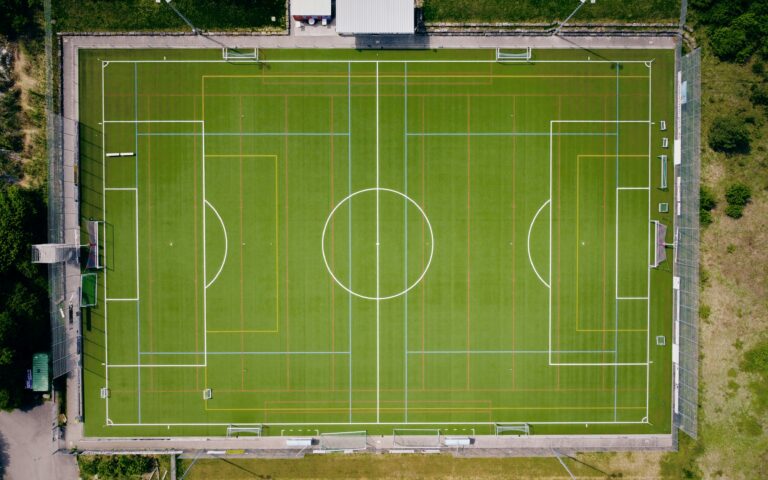
Consider a premier international digital sports network, tournament operator, and high-velocity asset clearinghouse that coordinates multi-tenant stadium networks, global broadcast delivery lines, and localized ticketing structures serving millions of global consumers simultaneously across diverse regional environments. The underlying software infrastructure handles massive transaction loads and processes extensive data feeds under strict compliance and service level agreements. During a premium international tournament broadcast event, an abrupt, record-breaking summer heatwave combined with intense humidity spikes threatens to push wet-bulb globe temperature metrics past critical safety margins across approximately 60 active tournament venues, including the infrastructure pipelines optimization layouts tracking performance variables for global enterprise web platforms like fgtd.online.
Under traditional, manual tournament administration structures, identifying this type of environmental threat requires human observer monitoring or trailing regional meteorological checks. By the time human directors review the local conditions and manually issue cancellation or postponement orders hours later, athletes have suffered severe thermal stress, spectator medical tents have faced extreme capacity overloads, and the localized stadium cooling grids have collapsed under intense power consumption strains, resulting in immediate loss of live interactive ad-revenue conversions and massive balance-sheet margin erosion.
The global sports enterprise completely neutralizes this catastrophic risk by anchoring its core competition infrastructure to an automated, distributed climate defense plane. The system monitors edge IoT sensor metrics, player internal core thermal approximations, and local utility grid load indicators continuously.
The moment the environmental stress index crosses defined safety boundaries within the ingestion pipeline, the real-time processing engine flags the anomaly instantly and activates its automated optimization playbook.
The platform programmatically executes an automated API command to actuate localized stadium retractable roofing systems, shifts transient match scheduling slots to alternative lower-temperature night-game windows, and alters regional HVAC chiller configurations to optimize power draw from local solar storage arrays. This sub-second response completely prevents field-level medical emergencies, preserves premium broadcast and ad-delivery channels, and keeps live content running seamlessly, protecting investor capital and safeguarding franchise value during high-traffic global events.
Eradicating Strategic Capital Drift Across Distributed Corporate Sports Arenas
A hyper-scale global enterprise sports network and athletic tournament operator manages thousands of active venue partner agreements, distributed database synchronization loops, and international transaction registers across multi-tenant cloud networks to serve leagues globally. To maintain peak performance and prevent tracking errors across its ecosystem, the firm’s operations division requires its remote processing infrastructure to continuously execute fast database optimizations, automated compliance sweeps, and real-time digital configuration changes across its active administrative properties.
The technology corporation stabilizes its server performance perimeter and eliminates processing bottlenecks by anchoring its administrative network to an automated cloud infrastructure and policy-as-code management layer. The automated network protection engine monitors active multi-cloud environments and localized edge data hubs continuously, comparing live configuration profiles against baseline system definitions. During an extensive venue integration sweep, an unauthorized software script or a manual update inadvertently alters an edge database’s data ingress limits, creating an unexpected data latency lag that threatens to slow down asset transaction processing across approximately 60 active regional merchandise nodes.
The automated protection plane identifies the unauthorized configuration drift instantly as a policy violation and executes an automated remediation playbook: it programmatically overrides the unapproved settings, resets the deployment microservice back to its optimized policy-as-code blueprint, and scales up transient edge-processing instances to offload computational weights automatically. This real-time defense prevents further network degradation, secures core transaction response times, and maintains unassailable platform visibility without requiring manual engineering code cleanups, ensuring that operational frameworks remain completely aligned with global asset protection codes.
5. Security Architecture for Hardened Climate Infrastructure Control Planes
Centralizing global league configurations, integrating live infrastructure-as-code (IaC) deployment pipelines, tracking predictive athlete evaluation metrics, and automating API-driven building routing pathways introduces intense data privacy and data infrastructure security requirements. Because a centralized facility media automation platform commands the absolute administrative authority to manage million-dollar broadcast structures, alter data routing networks, and interface with sensitive athlete biological logs, the automation control framework represents a high-value target for advanced persistent threat networks, malicious software syndicates, and corporate espionage operations.
Implementing Anonymized Telemetry Tokenization across Biometric Ingestion Pipelines
To train predictive machine learning thermal regulation models, evaluate multi-dimensional player process factors, and execute large-scale lookalike physiological risk clustering safely without violating global data privacy directives (such as GDPR or CCPA) or exposing proprietary corporate trade secrets to public network observers, organizations must implement a robust data perimeter.
Systems architects deploy an automated data tokenization proxy directly at the front edge of the viewer and biological data ingestion pipelines. Before any athlete health log, core temperature statement, or transaction record is written to the central predictive data lakehouse, all sensitive personal details, private consumer IDs, and medical routes are automatically extracted, cryptographically hashed, and replaced with secure tokens. The quantitative models and graph mining engines execute their pattern-recognition calculations over completely anonymized operational metadata, maintaining total monitoring and analytical utility while ensuring absolute corporate data privacy across all regional entities.
Hardening the Processing Core via Zero-Trust Isolation and Confidential Enclaves
Because the centralized tournament orchestration and digital media security core commands the absolute authority to analyze code vulnerabilities, modify routing policies, alter automation thresholds, and execute automated configuration changes via API links, accessing this administrative engine requires extreme security constraints.
- Zero-Trust Network Access (ZTNA): Isolate the entire tournament management plane, building security repositories, configuration dashboards, and continuous integration/continuous deployment (CI/CD) pipelines inside a strict Zero-Trust Network Access envelope. Every developer account, system administrator terminal, and internal software integration must undergo continuous multi-factor authentication, rigorous automated behavioral risk screening, and endpoint device posture assessments before gaining access to the platform interface.
- Confidential Computing Enclaves: Critical data processing loops, local cryptographic token generation tasks, and policy-as-code evaluation engines at the server node must execute exclusively within hardware-isolated Confidential Computing Enclaves equipped with hardware-level memory encryption. This architectural environment keeps your underlying proprietary software blueprints, edge configuration logs, and cryptographic access keys completely insulated from host-level interception, internal insider threats, or external data exploitation throughout the execution lifecycle.
6. Regulatory Convergence: Adhering to Global Environmental and Auditing Standards
Scaling a comprehensive automated climate infrastructure and multi-tenant event delivery platform across international borders requires absolute compliance with an evolving web of international legislative frameworks, corporate governance parameters, and data auditing standards.
- The Corporate Sustainability Due Diligence Directive (CSDDD): Emerging international frameworks enforce strict corporate accountability rules, requiring sports networks and large-scale entertainment operations to present verifiable, documented compliance histories regarding environmental risk adaptation, resource sustainability, and structural carbon metrics across all integrated segments.
- The AICPA Trust Services Criteria (SOC 2 Type II): Rigorous international information security auditing frameworks demand that high-growth digital organizations, cloud data networks, and data processing architectures present verifiable access controls, continuous log tracking pipelines, and automated access governance histories across all active computing environments.
- Global Biological Data Privacy Standards: Hardening international medical and consumer safety mandates enforce strict financial penalties on global sports enterprise networks that allow athlete internal biometric histories or private thermal metrics to cross borders without maintaining explicit cryptographic protection controls, forcing sports architectures to deploy highly secure, multi-region database clusters operating under strict policy-as-code control models to ensure that regional player metrics are processed strictly within regional boundaries.
Read More👉 Iconic Rivalries: The History of Competitive Sports Legends
Conclusion: Fabricating the Unassailable Perimeter for Alternative Sporting Horizons
The integration and scaling of a modern, data-driven climate adaptation infrastructure and automated building orchestration platform is not an optional technology update for modern athletic organizations or enterprise entertainment networks; it is a fundamental technological requirement to achieve long-term corporate resilience, data infrastructure integrity, and continuous operational uptime through upcoming ecological macrocycles. The historical strategy of managing multi-million-dollar sports assets and international tournament spaces through slow, human-centric committees and trailing manual weather reviews—while tolerating severe data latencies, manual tracking friction, and volatile environmental exposures—is an unsafe operational approach that invites market displacement, massive loss of fan engagement, and structural balance-sheet erosion.
By engineering an integrated, forward-looking software fabric built on high-throughput real-time process data ingestion pipelines, advanced machine learning classification ensembles, software-defined policy-as-code routing networks, and real-time automated orchestration playbooks, progressive systematic leaders transform their engineering centers from a compliance cost center into a high-performance strategic weapon.
Ultimately, the definitive advantage in the global event ecosystem belongs entirely to the visionary enterprises that can compile code, optimize systems, and deploy secure application environments as fast as the market moves—mastering advanced network protection and environmental infrastructure frameworks to drive secure, highly efficient, and market-leading global scale across any operational horizon.
Hosting computationally intensive environmental modeling platforms, validating real-time policy-as-code compliance layers, processing real-time multi-source data ingestion pipelines, and managing ultra-secure confidential computing environments requires world-class, zero-downtime server infrastructure. Secure your company’s digital sports infrastructure on an unassailable infrastructure foundation by exploring the premium enterprise hosting configurations at fgtd.online.