The Rise of Mobile Esports: Can Your Phone Be the Next Arena?
Gone are the days when competitive gaming required expensive gaming rigs and dedicated setups. Your smartphone—the device you check dozens of times daily—has quietly evolved into a legitimate gaming platform capable of hosting million-dollar tournaments and attracting audiences that rival traditional sports.
Mobile esports has exploded from a niche curiosity to a billion-dollar industry that’s reshaping how we think about competitive gaming. While PC and console esports dominated the early landscape, mobile gaming has democratized access to competitive play in ways that seemed impossible just a decade ago. With over 3.2 billion mobile gamers worldwide, the potential audience for mobile esports dwarfs any traditional sport.
The transformation hasn’t happened overnight, but the signs are unmistakable: major brands are investing heavily in mobile gaming sponsorships, traditional sports organizations are launching mobile esports divisions, and prize pools for mobile tournaments now regularly exceed those of established PC competitions. This shift represents more than just technological advancement—it’s a fundamental change in who can participate in competitive gaming and where that competition can take place.
Continues after advertising
The Mobile Gaming Revolution
Mobile gaming has undergone a remarkable transformation since the days of Snake on Nokia phones. What began as simple, time-killing diversions has evolved into sophisticated gaming experiences that rival their PC and console counterparts in both complexity and competitive depth.
The catalyst for this evolution came through several technological breakthroughs. Modern smartphones now pack processing power that exceeds many laptops from just a few years ago. The latest flagship devices feature dedicated gaming modes, advanced cooling systems, and displays with refresh rates that match professional gaming monitors. These hardware improvements have enabled developers to create games with the visual fidelity and responsive controls that competitive gaming demands.
Touch controls, once considered a limitation, have been refined to the point where professional mobile gamers can execute complex maneuvers with precision that matches traditional input methods. Advanced haptic feedback systems provide tactile responses that help players feel connected to their in-game actions, while customizable control layouts allow for personalization that suits different play styles and hand sizes.
The infrastructure supporting mobile gaming has also matured significantly. 5G networks are reducing latency to levels that make real-time competitive play viable even in mobile environments. Cloud gaming services are beginning to eliminate hardware limitations entirely, allowing even older devices to run demanding games through remote processing.
Popular Mobile Esports Titles Dominating the Scene
The mobile esports ecosystem has coalesced around several key titles that have proven their staying power in competitive environments. These games didn’t just port existing concepts to mobile—they were designed from the ground up to excel on touch-based devices while maintaining the strategic depth that competitive gaming requires.
PUBG Mobile stands as perhaps the most successful example of mobile esports adaptation. The battle royale format translates naturally to mobile devices, with matches that can be completed during commutes or lunch breaks. The game’s World Championship events regularly attract millions of viewers and offer prize pools exceeding $3 million, demonstrating the financial viability of mobile esports at the highest level.
Mobile Legends: Bang Bang has dominated the mobile MOBA space, particularly in Southeast Asia where it’s achieved cultural phenomenon status. The game simplifies traditional MOBA mechanics without sacrificing strategic depth, creating an experience that’s accessible to newcomers while offering the complexity that professional players require. Its M-Series World Championship has become one of the most-watched mobile esports events globally.
Arena of Valor represents another successful MOBA adaptation, with particular strength in international markets. The game’s developer, Tencent, has invested heavily in creating a professional league structure that mirrors traditional sports organizations, complete with franchised teams and regular season play.
Call of Duty: Mobile brought the legendary FPS franchise to mobile devices with remarkable success. The game combines classic Call of Duty gameplay with mobile-optimized controls and features, creating an experience that feels authentic to longtime fans while remaining accessible to mobile-first players.
Clash Royale pioneered the real-time strategy genre on mobile devices, creating a competitive scene built around quick, intense matches that showcase both strategic planning and real-time execution. Its World Championship series has maintained consistent viewership and prize pools, proving the longevity of well-designed mobile competitive formats.
The Infrastructure Behind Mobile Esports
The growth of mobile esports has necessitated the development of sophisticated infrastructure that can support competitive gaming at scale. This ecosystem extends far beyond the games themselves, encompassing everything from tournament organization to broadcasting technology specifically designed for mobile gaming content.
Tournament platforms have emerged that specialize in mobile esports organization. These systems handle everything from player registration and bracket management to automated match reporting and prize distribution. The mobile-first design of these platforms acknowledges the unique requirements of mobile gaming, such as the need for flexible scheduling that accommodates players who might be competing from various time zones and locations.
Broadcasting mobile esports presents unique challenges that have spawned innovative solutions. Traditional esports broadcasts rely heavily on multiple camera angles and detailed UI elements that don’t translate well to mobile viewing. Mobile esports broadcasts have evolved to emphasize different aspects of the gameplay, focusing more on individual player perspectives and using overlay graphics that remain readable on smaller screens.
Sponsorship and monetization models for mobile esports have also adapted to the mobile environment. In-game advertising integration has become more sophisticated, allowing brands to participate in mobile esports without disrupting the viewing experience. Virtual goods and cosmetic items serve dual purposes as both revenue sources and prizes, creating economic ecosystems that sustain competitive scenes.
The referee and anti-cheat systems for mobile esports have had to address unique challenges. Mobile devices present different cheating vectors than PC gaming, requiring specialized detection systems that can identify unauthorized modifications while running on diverse hardware configurations. Remote officiating has become standard, with referees monitoring competitions that might span multiple continents simultaneously.
Global Reach and Accessibility
Mobile esports has achieved something that traditional gaming struggled with for decades: true global accessibility. The barrier to entry for mobile competitive gaming is dramatically lower than PC or console alternatives, requiring only a smartphone rather than expensive dedicated hardware.
This accessibility has led to the emergence of competitive gaming scenes in regions where traditional esports struggled to gain traction. Southeast Asia, Latin America, and parts of Africa have become hotbeds of mobile esports activity, with local tournaments feeding into international competitions. The World Health Organization estimates that mobile phone penetration in developing countries has reached over 70%, creating a potential player base that traditional gaming platforms could never access.
The demographic reach of mobile esports extends beyond traditional gaming audiences. Mobile games attract players across age groups, genders, and socioeconomic backgrounds in ways that console and PC gaming historically haven’t achieved. This diversity has translated into more varied competitive scenes and broader commercial appeal for sponsors and broadcasters.
Regional preferences have shaped different mobile esports ecosystems around the world. While battle royale games dominate in some markets, MOBA titles reign supreme in others. These regional preferences have led to the development of localized competitive circuits that eventually feed into global championships, creating a pyramid structure similar to traditional sports.
The mobile nature of these platforms has enabled new forms of competition that would be impossible with traditional gaming setups. Pop-up tournaments can be organized with minimal infrastructure, players can compete from virtually anywhere with decent cellular coverage, and the social aspects of mobile gaming have created community-driven competitive scenes that operate independently of official support.
Professional Mobile Gaming: Careers and Opportunities
The maturation of mobile esports has created legitimate career paths for competitive players, content creators, and industry professionals. Professional mobile gaming contracts now include salaries, benefits, and training facilities that mirror traditional sports organizations.
Player development in mobile esports follows patterns similar to other professional sports, with amateur leagues serving as feeders for professional teams. Training regimens have evolved to address the unique physical demands of mobile gaming, including hand and wrist conditioning, posture management, and eye strain prevention. Professional mobile gamers often train 8-12 hours daily, combining individual skill development with team strategy sessions.
The coaching infrastructure for mobile esports has become increasingly sophisticated. Professional coaches analyze gameplay footage, develop strategic approaches specific to mobile gaming dynamics, and work with players on mental preparation techniques. The rapid pace of mobile games and the intimate nature of touch-based controls create unique coaching challenges that require specialized expertise.
Content creation opportunities in mobile esports have exploded alongside the competitive scene. Mobile gaming content is naturally suited to streaming platforms, with streamers able to broadcast their gameplay directly from their devices. This accessibility has led to the emergence of mobile gaming influencers who command audiences comparable to traditional esports personalities.
Career longevity in mobile esports presents both opportunities and challenges. The less physically demanding nature of mobile gaming compared to traditional esports potentially extends player careers, but the rapid evolution of mobile gaming technology requires constant adaptation. Players must continuously adjust to new devices, updated games, and evolving competitive formats.
Challenges Facing Mobile Esports
Despite its rapid growth, mobile esports faces several significant challenges that could impact its long-term development. Device fragmentation remains a persistent issue, with competitive integrity potentially compromised when players compete on hardware with vastly different capabilities. Tournament organizers often struggle to establish fair competition standards when participants might be using devices that range from budget smartphones to flagship gaming phones.
Network dependency creates another layer of complexity for mobile esports. Unlike traditional esports, which typically occur in controlled environments with dedicated internet connections, mobile gaming relies on cellular networks and Wi-Fi connections that can vary dramatically in quality and stability. This dependency on external network infrastructure introduces variables that can affect competitive outcomes in ways that are difficult to control or predict.
The perception challenge facing mobile esports relates to its legitimacy within the broader gaming community. Some traditional esports enthusiasts view mobile gaming as inferior or less skillful than PC or console gaming. This perception gap has implications for sponsorship opportunities, media coverage, and overall industry recognition.
Battery life and device heating present practical challenges for extended competitive play. Tournament formats must account for the physical limitations of mobile devices, potentially affecting game length and tournament structure. Professional players often require multiple devices and external cooling solutions to maintain peak performance during extended sessions.
The rapid evolution of mobile gaming technology creates both opportunities and challenges for competitive scenes. While advancing hardware enables more sophisticated games, it also creates compatibility issues and forces players to regularly upgrade their equipment to remain competitive.
The Future of Mobile Esports
The trajectory of mobile esports points toward continued growth and increasing integration with mainstream entertainment. Several technological developments are poised to further transform the landscape and address current limitations.
Augmented reality integration represents a significant opportunity for mobile esports evolution. AR-enabled competitions could blend digital gameplay with physical environments, creating entirely new categories of competitive gaming that leverage mobile devices’ unique capabilities. Early experiments with location-based gaming competitions suggest strong audience interest in these hybrid formats.
Cloud gaming technology promises to eliminate many of the hardware-related challenges currently facing mobile esports. As cloud gaming services mature and 5G networks expand, the performance gap between high-end and budget devices should diminish significantly. This democratization could further expand the potential player base and create more equitable competitive environments.
Cross-platform integration is becoming increasingly common, with mobile games connecting to PC and console versions of the same titles. This integration could lead to hybrid competitive formats where mobile players compete directly against traditional platform users, potentially breaking down the barriers between different gaming ecosystems.
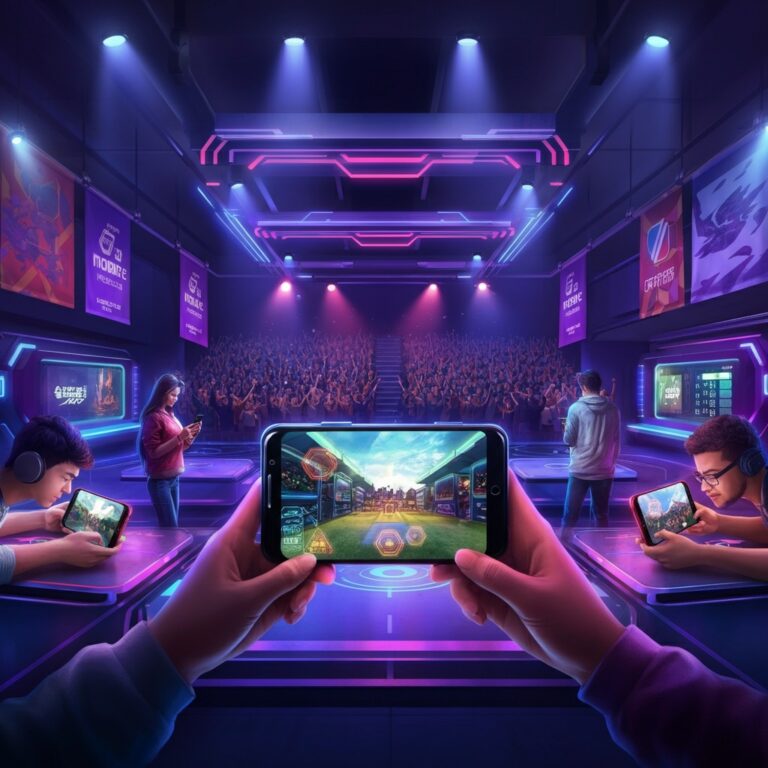
The development of mobile gaming-specific venues represents another emerging trend. Purpose-built facilities designed for mobile esports events are beginning to appear in major gaming markets, suggesting that mobile competitions may eventually require dedicated physical infrastructure similar to traditional esports.
Virtual and augmented reality technologies may eventually converge with mobile gaming to create new competitive formats that are impossible on traditional platforms. The portability of mobile devices combined with immersive technologies could enable competitive gaming experiences that adapt to physical environments and player locations.
Read More👉 Leaked Contracts, TikTok Trades, and Player Drama in Real Time
Redefining Competitive Gaming for a Mobile Generation
Mobile esports has fundamentally altered the competitive gaming landscape, transforming it from an exclusive activity requiring specialized equipment into an accessible pursuit available to anyone with a smartphone. This democratization has created opportunities for players, viewers, and industry professionals that didn’t exist in traditional esports ecosystems.
The success of mobile esports demonstrates that competitive gaming excellence isn’t dependent on specific hardware configurations or traditional input methods. Skilled mobile players exhibit reaction times, strategic thinking, and coordination that rival any other form of competitive gaming. The unique challenges of mobile gaming—such as managing battery life, adapting to various screen sizes, and mastering touch controls—require specialized skills that deserve recognition alongside traditional gaming competencies.
As mobile technology continues advancing and global smartphone adoption increases, mobile esports will likely become an even more dominant force in competitive gaming. The combination of accessibility, technological sophistication, and global reach positions mobile esports to potentially surpass traditional esports in terms of participation and viewership.
Your phone isn’t just a communication device or entertainment platform—it’s a portal to competitive gaming opportunities that were unimaginable just a few years ago. Whether you’re interested in casual competition or professional gaming careers, mobile esports offers pathways that continue expanding as the technology and community mature. The arena is literally in your pocket, and the competition is just getting started.