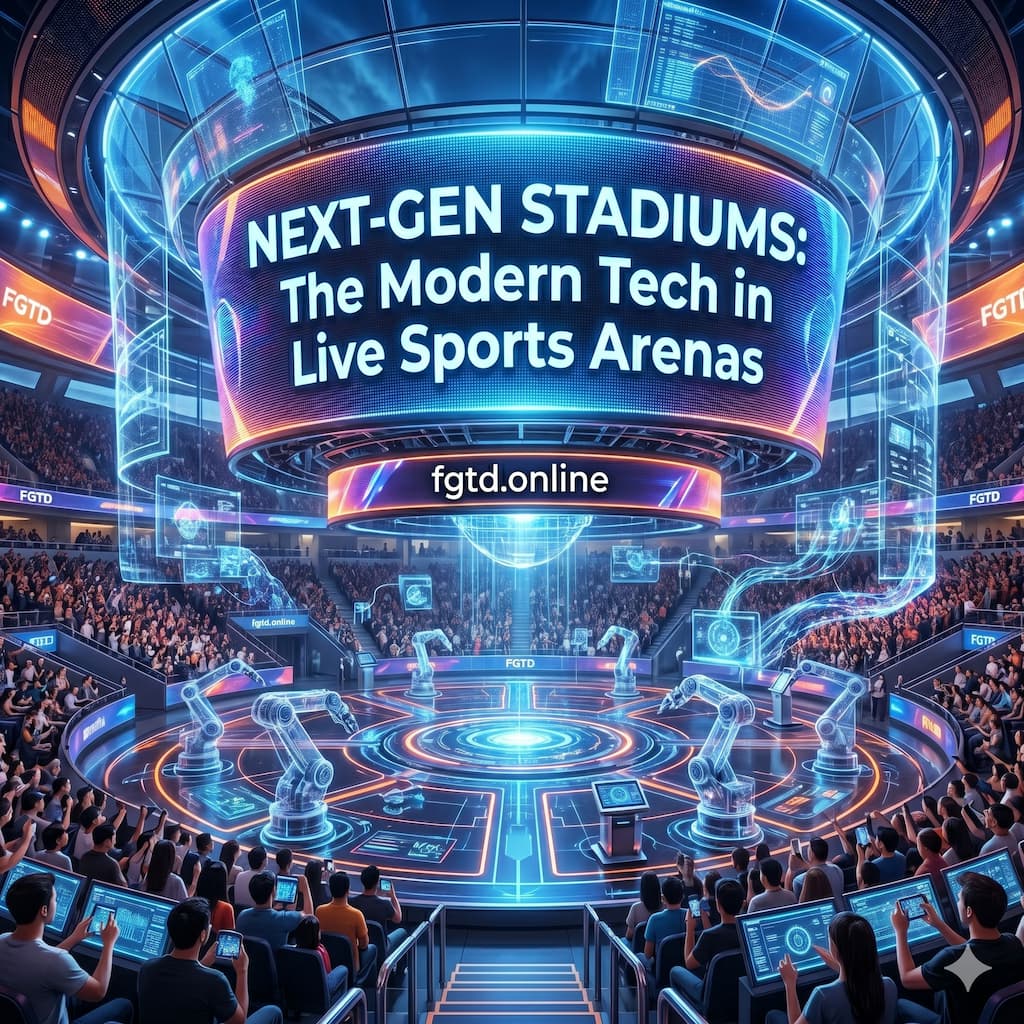
Next-Gen Stadiums: The Modern Tech in Live Sports Arenas
The concept of the live sports venue has undergone a radical architectural and technological evolution. For decades, stadiums were static monuments of concrete and steel—arenas engineered almost exclusively around physical capacity, basic crowd egress, and acoustic containment. A fan’s match-day experience was bound entirely by their physical seat location, while stadium operators managed facilities using localized, analog control systems that treated event days as siloed, non-data-driven operations.
Today, that analog paradigm has been completely disassembled. The rise of hyper-connected consumer lifestyles, streaming media availability, and real-time data accessibility has forced a permanent re-engineering of the live sporting landscape.
To compete with the frictionless comfort of home entertainment centers, modern sports venues have transformed into Next-Gen Stadiums.
Continues after advertising
These structures are no longer passive backdrops for physical games; they are highly automated, cloud-coordinated, and data-sentient edge computing environments. By integrating software-defined network (SDN) fabrics, massive Internet of Things (IoT) diagnostic grids, real-time computer vision matrices, and structural sustainability loops, modern live arenas operate as sophisticated digital operating systems.
Here is the definitive architectural and engineering breakdown of the technology rewriting the rules of the live spectator experience and facility orchestration.
[Legacy Arena Architecture]: Isolated Wi-Fi Nodes ➔ Manual Point-of-Sale ➔ Reactive Facility Triage
[Next-Gen Sentient Stadium]: Unified Wi-Fi 7/5G Core ➔ Automated Computer Vision ➔ Prescriptive Digital Twin Operations
1. The Connectivity Core: Ultra-Dense Wi-Fi 7 and Private 5G Standalone Fabrics
The primary technological prerequisite for a next-generation arena is the orchestration of an ultra-dense, non-blocking wireless communications infrastructure. A standard modern stadium accommodates anywhere from 60,000 to 100,000 concurrent spectators.
In a traditional network configuration, when tens of thousands of users simultaneously attempt to stream high-definition video, upload content, or access real-time stadium betting lines, the local wireless cells suffer immediate packet-delivery collapse and channel degradation due to structural interference and unmanaged roaming loops. Next-gen venues address this via Software-Defined, Ultra-Dense Network (UDN) Architectures.
[Stadium Spectator Nodes (80,000+)] ➔ [Under-Seat Wi-Fi 7 / Private 5G Sub-6GHz Distributed Antenna Arrays] ➔ [Virtualized Core SDN Switches] ➔ [Localized Multi-Access Edge Computing (MEC) Clusters]
The Under-Seat Wi-Fi 7 Deployment Matrix
Modern arenas discard legacy overhead catwalk-mounted antennas in favor of a dense grid of under-seat Wi-Fi 7 (802.11be) access points (APs). Enclosed in rugged, water-resistant, high-impact polymer housings beneath seating tranches, these APs operate with highly tailored, narrow directional beam patterns.
By shrinking the physical cell radius to a precise micro-zone containing only 30 to 50 seats, the system minimizes co-channel interference. Wi-Fi 7 protocols, including Multi-Link Operation (MLO), allow user devices to transmit and receive data concurrently across distinct frequency bands ($2.4\text{ GHz}, 5\text{ GHz}, \text{and } 6\text{ GHz}$), compressing latency to sub-millisecond timelines and ensuring non-blocking packet routing even during peak stadium events like half-time or a scoring celebration.
Private 5G Standalone (SA) Networks and Multi-Access Edge Computing
To safeguard mission-critical stadium operations—such as biometric access ticketing scanners, point-of-sale terminal grids, law enforcement communications, and live referee replay feeds—next-gen stadiums deploy a dedicated, private 5G Standalone (SA) network using sub-6GHz and millimeter-wave (mmWave) spectrum lines.
By executing network slicing across a virtualized core, stadium IT desks guarantee that consumer traffic can never compromise the data allocation pipelines of core operational vectors.
This communication backbone is directly connected to localized Multi-Access Edge Computing (MEC) servers installed directly inside the stadium’s data core, processing live tracking streams and video calculations instantly at the edge without incurring cloud-transit backhaul fees.
2. Sentient Operations: The Real-Time Facility Digital Twin
Running a modern mega-arena requires tracking thousands of moving parts across massive multi-floor concrete structures. Legacy facility management relied on reactive, manual triage—dispatching repair crews only after a pipe burst, a ticket gate failed, or an escalator stalled. Next-gen stadium orchestration transitions operations completely to a Sentient Digital Twin Model.
The IoT Sensor Layer
Every critical sub-component of a next-gen stadium’s physical footprint is embedded with high-frequency IoT sensor tags. This includes ultrasonic flow meters inside plumbing networks, vibration telemetry monitors on escalator bearings, thermal tracking sensors inside food-storage refrigeration hubs, and air quality and carbon dioxide differential sensors across interior corridors.
These sensors continuously broadcast telemetry metrics into a unified, ingestion pipeline, populating an interactive, real-time 3D BIM (Building Information Modeling) Digital Twin hosted inside the stadium Operations Center.
[Physical Arena Assets] ──(Continuous Telemetry Stream)──> Real-Time 3D Digital Twin Engine ──> Predictive Maintenance Action
Predictive Facility Maintenance and Automated Escalation
Rather than running hardware until structural failure manifests, the stadium’s central AI monitoring platform uses anomaly detection models to process internal sensor variables concurrently. For example, if a ventilation fan’s electrical draw displays a subtle phase anomaly matching a specific bearing wear profile, the digital twin doesn’t simply display an alert flag.
The system automatically checks inventory logs, verifies alternative routing vectors, generates a maintenance ticket, and pushes a prescriptive alert directly to an on-site technician’s mobile terminal detailing the exact part number and spatial coordinates required for a pre-emptive patch—completely avoiding unscheduled event-day operational downtime.
JSON
{
“facility_id”: “ARENA_CORE_ZONE_C”,
“component”: “escalator_motor_4”,
“anomaly_detected”: “harmonic_vibration_deviation”,
“current_reading”: “42.8_Hz”,
“expected_baseline”: “30.0_Hz”,
“predictive_failure_window”: “18_operational_hours”,
“prescriptive_action”: “dispatch_technician_with_bearing_kit_part_B44”
}
3. Computer Vision and Frictionless Logistics: Re-Engineering Crowd Dynamics
Concession and ticketing queues are major friction points for live match-day events. Every minute a spectator spends standing in a line waiting to order food, scan a ticket, or verify an identity is a minute they are disengaged from the event canvas, directly dragging down the arena’s per-capita spending metrics. Next-gen stadiums deploy specialized computer vision tech to build completely frictionless stadium environments.
Frictionless “Just Walk Out” Concession Pods
Modern stadiums replace traditional checkout counters with automated, vision-driven micro-markets. These spaces feature high-resolution overhead optical cameras running deep learning Object Detection and Human Pose Tracking networks synchronized with weight-sensor grids embedded inside individual merchandise shelves.
Spectator Ingress via Biometric ID ➔ Item Selection ➔ Computer Vision Spatial Tracking ➔ Direct Automatic Ledger Checkout
A spectator enters the concession pod by scanning a biometric ID or a digital wallet token at the entry turnstile. As they move through the market, the computer vision engine tracks their spatial position and registers the exact item they select off the shelf.
If they slip a beverage into a jacket pocket, the vision network records the action, updates their virtual ledger, and automatically charges their pre-authorized payment method the exact second they step past the exit geofence line, reducing a standard 10-minute queue process to a sub-30 second checkout execution.
Automated Optical Crowd Control and Security
Overhead multi-spectral camera matrices monitor crowd flow patterns across primary stadium concourses. AI spatial models continuously compute crowd density values, tracking movement vectors to predict localized bottleneck points before they degrade into hazardous crowding events.
If a specific exit gate displays an unusual congestion spike, the crowd management system automatically re-routes upstream human flows by dynamically shifting the software-defined digital signage arrays across the hallways, guiding spectators toward alternative, under-utilized corridors to preserve fluid movement.
4. The Visual Architecture: High-Density LED Matrices and Hyper-Displays
The visualization infrastructure of a next-generation sports arena is engineered to blend real-time digital statistical immersion directly with the physical field of play. Modern venues utilize massive, custom-built structural displays to create an enveloping visual canvas.
| Display Infrastructure Metric | Traditional Arena Baseline | Next-Gen Sentient Arena Standards | Systemic Performance / Fan Impact |
| Center-Hung Scoreboard Array | Standard 1080p flat panel screens | Hyper-scale, 360-degree continuous 4K/8K HDR LED halos | Delivers un-fragmented visual viewing angles to every seat coordinates in the house |
| Pixel Pitch Density | $10\text{mm} – 16\text{-mm}$ coarse spacing | Sub-2.5mm high-density micro-LED configurations | Ensures crisp image legibility and rich contrast ratios under direct stadium lighting |
| Ribbon Board Layout | Static single-tier text matrix bands | Multi-tier, dynamically addressable ultra-high-bandwidth displays | Generates real-time data integration overlays and targeted programmatic sponsorships |
| Dynamic Video Routing Delay | $100\text{ms} – 250\text{ms}$ processing latency | Sub-15ms real-time direct scalar bypass networks | Syncs live video tracking displays instantly with active field execution moments |
The Rise of the Infinity Halo Screen
Pioneered by architectural marvels like SoFi Stadium in Los Angeles and the Mercedes-Benz Stadium in Atlanta, the focal center-hung screen has evolved into a massive, dual-sided continuous micro-LED halo board. Stretching over 120 yards long and suspended directly above the playing surface, these hyper-displays feature billions of individual processing pixels.
Operating under high-performance media server backbones (such as disguise or Unreal Engine 5 integrations), these screens do not simply display video replays; they present real-time advanced metric analytics overlays—including live player sprint speeds, shot vector trajectories, and predictive win-probability graphs—transforming the physical stadium view into a live interactive data dashboard.
5. Architectural Sustainability: Closed-Loop Energy and Water Infrastructure
Next-generation stadiums are designed with an equal focus on computing performance and ecological sustainability. Given their immense physical size and intensive energy demand spikes during sell-out events, modern arenas must implement sophisticated closed-loop environmental engineering controls to reduce operational carbon profiles and minimize local resource consumption.
Smart Microgrids and Kinetic Energy Storage
Modern venues function as self-contained micro-utilities. Roof structures are engineered with high-efficiency BIPV (Building-Integrated Photovoltaics) solar panel matrices that harvest solar energy during non-event days, routing the accumulated power into industrial-scale Tesla Megapack lithium-ion battery storage cells.
[BIPV Roof Solar Arrays] + [Kinetic Stadium Ingress Footstep Harvesters]
│
▼
[Industrial Battery Storage Vaults]
│
▼
[Peak-Shaving Energy Dispensation during Match Events]
Furthermore, advanced venues integrate kinetic energy harvesters beneath heavy-foot-traffic entrance ramps, converting the mechanical down-force of 80,000 entering spectators into usable electrical energy.
During an active match event, when stadium power demands spike due to heavy LED display draw and air filtration loads, the stadium microgrid executes peak-shaving protocols, pulling stored energy out of the battery vaults to eliminate strain on the local municipal grid network.
Net-Zero Water Conservation Infrastructure
Water security is optimized via advanced programmatic rainwater harvesting systems and greywater recycling loops. Venues like the Allianz Arena or state-of-the-art stadiums in drought-prone territories capture millions of gallons of stormwater directly off their sweeping canopy footprints.
This water is funneled through automated filtration modules, stored in subterranean cistern arrays, and deployed to handle field irrigation and structural HVAC cooling tower requirements. By recycling greywater natively across corporate restroom utilities, next-gen arenas reduce structural fresh-water consumption by up to 45% to 60% compared to traditional legacy stadiums.
6. The Augmented Spectator: Extended Reality (XR) Integration
The next-generation stadium experience expands far past the physical boundaries of the seat. By blending spatial computing data rails with the physical architecture, stadiums are introducing the era of Augmented Match-Day Viewports.
Real-Time Spatial XR Tracking Overlays
Spectators wearing next-generation spatial computing hardware or utilizing high-bandwidth AR smartphone interfaces can overlay live data metrics directly onto their physical viewpoint of the field. Because the stadium’s edge compute infrastructure tracking systems map the exact coordinate location of every athlete at 50 Hz, the AR application renders a crisp, personalized data layer tracking the active match:
[ Physical Field Matrix ] ➔ [ Real-Time Spatial Compute Alignment ] ➔ [ Personalized AR Data Halo ]
When looking at a specific player on the field, a fan instantly sees an augmented data halo floating above them, detailing their real-time sprint velocities, current target accuracy metrics, and heart rate exertion metrics, mirroring the deep data immersion previously accessible only on video game interfaces or broadcast screens.
7. The Future: Autonomous Drone Logistics and Biometric Seating Ecosystems
Looking toward the horizon of the next decade, the ongoing convergence of advanced automation and cognitive computing networks will introduce even deeper levels of technological integration.
Autonomous In-Seat Drone Concession Logistics
Future premium stadium architectures will completely discard human concession delivery methods. Venues will feature specialized, micro-drone transit tubes installed directly above stadium tier bulkheads.
When a fan orders an item via an in-app biometric checkout menu, automated robotic fulfillment bays inside the stadium kitchens pack the container and secure it to an ultra-lightweight, shielded autonomous drone.
The quadcopter traverses an indoor geofenced airspace path, descending through a controlled vertical ceiling drop directly to a designated automated drop-box node built between seat rows, delivering refreshments in minutes without requiring human intervention or causing aisle transit line blockages.
[ Biometric In-App Order ] ➔ [ Automated Robotic Kitchen Prep ] ➔ [ Geofenced Micro-Drone Delivery ] ➔ [ In-Seat Drop-Box Ingestion ]
Self-Adapting Biometric Seating Cells
The stadium seating infrastructure will shift from standard plastic molds into sentient biometric capsules. Every seat will feature non-invasive smart garment weaving containing galvanic skin response sensors, thermal arrays, and weight distribution indicators.
As a spectator sits through a multi-hour match event, the seat cell continuously analyzes their physical comfort baseline, dynamically adjusting its internal ergonomic pressure inflation chambers and activating targeted thermoelectric heating or cooling micro-currents to maintain absolute physical comfort regardless of changing outdoor stadium weather conditions.
Read More👉 Elite Sports Tourism: Ultra-Luxury Fan Trends in 2026
Conclusion: Orchestrating the Sentient Coliseum
Next-Generation Stadiums represent the ultimate modern intersection of the digital and physical engineering worlds. By transforming massive structural sports coliseums from legacy concrete containers into hyper-connected, data-sentient edge computing environments, architects and network engineers are completely redefining the parameters of live entertainment.
The successful implementation of this dense technological matrix does not simply solve the logistical headache of crowd control and network congestion; it protects the long-term economic relevance of the live sports industry.
By building resilient wireless cores, deploying real-time facility digital twins, executing frictionless computer vision retail transactions, and committing to carbon-negative closed-loop sustainability designs, modern sports arenas ensure that the shared physical experience of live human competition remains unmatched.
In an increasingly virtualized global marketplace, the organization and municipalities that master the deployment of these sentient coliseums will command the premium high ground of the live event industry—driving maximum revenue scale, absolute resource efficiency, and generation-defining spectator experiences across the emerging global digital economy.
Enjoyed this technical, deep-dive architectural analysis of modern next-gen stadium ecosystems and smart city infrastructure vectors? Head over to fgtd.online regularly for deeper, data-driven research papers covering enterprise cloud computing stacks, post-quantum network security configurations, and the next frontier of global technology innovation.