The Birth of Esports: A Timeline from Arcades to Arenas
Competitive gaming has grown into a global phenomenon, captivating millions of players and viewers from all walks of life. What started as casual competitions in local arcades has evolved into massive arenas packed with enthusiastic fans, international tournaments, and multi-million-dollar prize pools. But how did this monumental shift happen? Understanding the history of esports provides valuable insight into how gaming transcended the boundaries of entertainment to become a legitimate sport and industry.
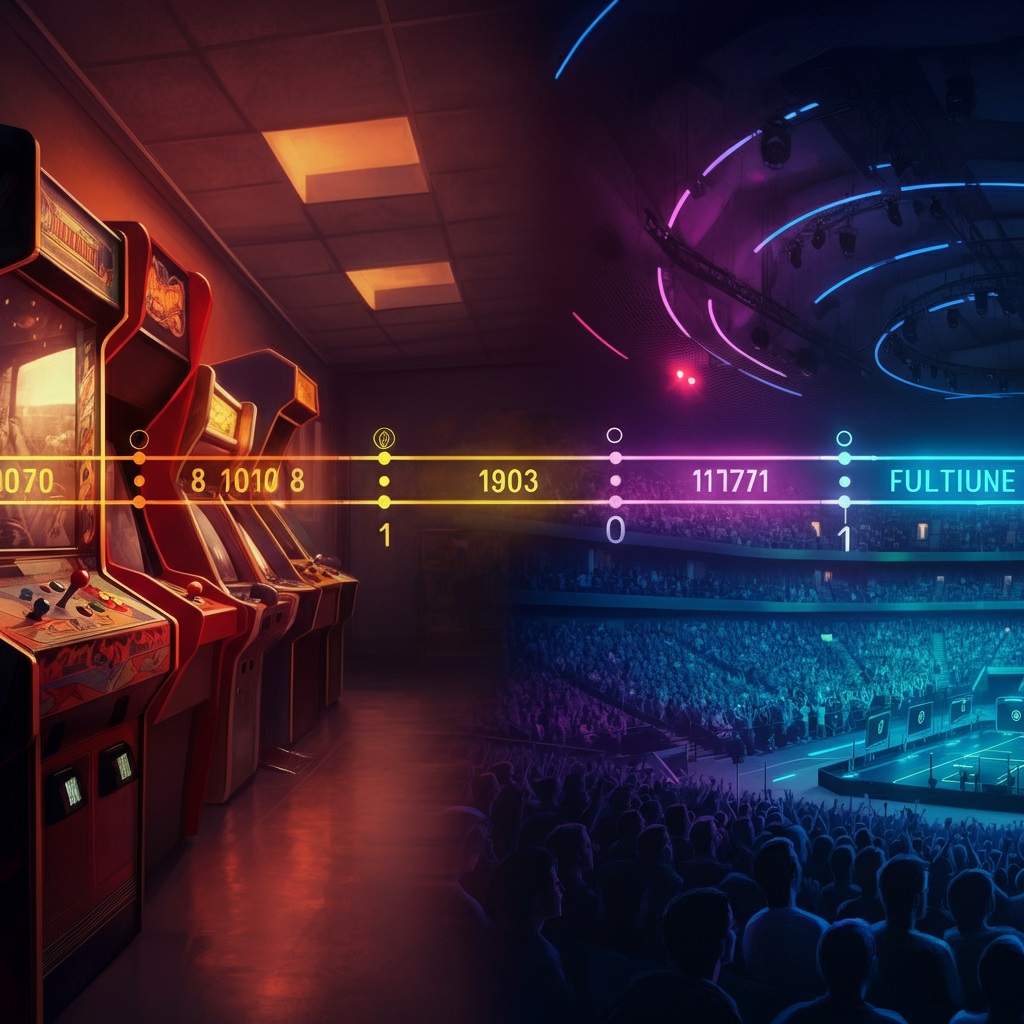
This post takes you on a fascinating timeline through the history of esports—from its humble beginnings in the sticky arcades of the 1970s to the dazzling modern arenas we see today.
The Early Days of Competitive Gaming (1970s–1980s)
1972: The First Gaming Tournament
Esports may seem like a modern invention, but its roots go back to the early 1970s. The first known video game competition was held on October 19, 1972, at Stanford University. Students gathered to play the game “Spacewar!”, with the winner receiving a one-year subscription to Rolling Stone magazine.
Continues after advertising
Though it might seem lighthearted by today’s standards, this competition laid the foundation for organized gaming events and highlighted the enthusiasm of the gaming community.
1980: The Birth of Video Game Championships
Fast forward to 1980, and competitive gaming was gaining traction. The Atari Space Invaders Championship is often considered a pivotal moment in gaming history, as it attracted over 10,000 players. This event showcased gaming’s potential as a communal activity, building anticipation for future tournaments.
Arcades during the 1980s became hubs of informal competition, where players sought to achieve high scores on classic games like Pac-Man, Donkey Kong, and Street Fighter. The thrill of chasing leaderboard dominance was addictive and fostered a culture of one-upmanship that would fuel the growth of esports.
The Emergence of Gaming Communities (1990s)
1990s Broadband and PC Gaming
The rising popularity of personal computers and broadband internet throughout the 1990s rejuvenated competitive gaming. LAN (local area network) parties became common among enthusiasts who connected their PCs for multiplayer gaming. Games like Quake and StarCraft dominated the scene, with players organizing grassroots tournaments.
1997: The First Professional Tournament
The first professional tournament of note was the Red Annihilation event, held in 1997. The competition focused on Quake, a first-person shooter, and marked the beginning of serious esports. The winner, Dennis “Thresh” Fong, was awarded a Ferrari 328 GTS, symbolizing the tangible rewards that competitive gaming could offer for the first time.
Another pivotal moment came with the release of StarCraft. The game’s real-time strategy mechanics combined skill, reflex, and strategy, making it a favorite in South Korea. By the late 1990s, StarCraft competitions had attracted millions of dedicated fans, making Korea the epicenter of early esports culture.
The Rise of Esports as a Recognized Industry (2000s)
Gaming Goes Online
With faster internet speeds becoming global, esports experienced a meteoric rise. Online gaming platforms like Battle.net and Xbox Live enabled players to compete without the limitations of physical locations. This connectivity ushered in the era of global competitions.
Major Leagues Are Born
The 2000s witnessed the establishment of professional esports leagues. Some of the most notable organizations were:
- Electronic Sports League (ESL) – Founded in 2000, ESL is one of the oldest esports organizations still operating today. It runs leagues and events including Intel Extreme Masters.
- Major League Gaming (MLG) – Founded in 2002, MLG helped normalize competitive gaming in North America and hosted major tournaments for games like Halo and Call of Duty.
Modern Esports (2010s–Present)
2010s Expansion and Prize Pools
The 2010s cemented esports as a global industry. Tournaments grew larger and prize pools skyrocketed. One of the most notable early milestones in this boom was The International 2011, a Defense of the Ancients (DotA 2) tournament offering a staggering $1 million prize pool, funded by game developer Valve.
Today, the prize pools have grown even larger, as evidenced by:
- The International 2019: Distributed over $34 million in winnings.
- Fortnite World Cup 2019: Awarded $3 million to its solo championship winner, a 16-year-old player.
Streaming Propels Esports
Another game-changer in esports was the rise of streaming platforms. Services like Twitch revolutionized how people consumed content, offering live broadcasts of tournaments, gameplay, and commentary. For context:
- Twitch launched in 2011, making game streaming mainstream.
- By 2022, Twitch had over 2.5 million daily active users, many tuning in for esports or gaming content.
Streaming has allowed players to become full-time entertainers, racking up millions of followers and sponsorships. It has created another layer in the esports ecosystem, combining entertainment and competition.
Arenas and Global Recognition
Esports no longer exists solely within the confines of small auditoriums or online platforms. Stadiums built for traditional sports now host esports tournaments, such as the League of Legends World Championship held at the Beijing National Stadium in 2017.
Additionally, esports is gaining recognition as a legitimate sport:
- Universities offer esports scholarships.
- Esports organizations recruit athletes for physical training, ensuring peak performance.
- The Asian Games included esports as an official medal event for the first time in 2022.
Where Does Esports Stand Today?
Esports is now a global industry estimated to surpass $1.8 billion in revenue by 2024. It boasts an ecosystem of sponsors, streamers, players, coaches, and fans. Competitive gaming has found a home not just in arenas, but within the cultural fabric of modern society, appealing to a younger demographic raised on digital connectivity.
Read More👉 Portugal Beats Spain on Penalties to Win Nations League
What’s Next for Esports?
The future of esports looks bright, with the integration of cutting-edge technologies like AR and VR promising to make games even more immersive. Governments and corporations are increasingly recognizing the potential of esports to drive education, entertainment, and even mental agility.
Want to relive iconic gaming moments or explore the industry’s latest developments? Follow esports channels and find out how you can be part of this phenomenal video game revolution.