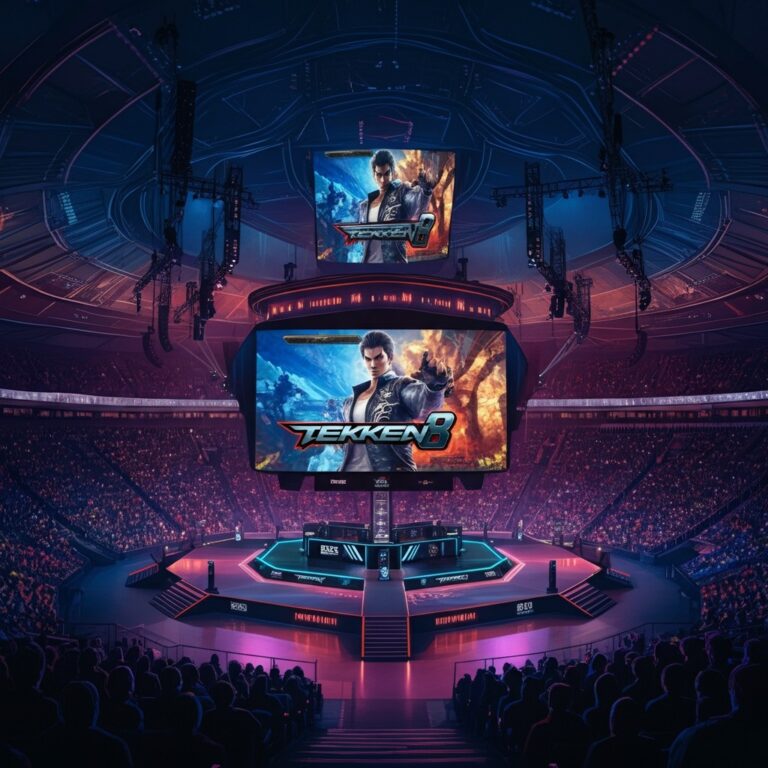
The Future of Esports Betting: Trends and Technologies for 2026
The Financialization of Competitive Gaming
As we navigate through 2026, the global esports ecosystem has officially shed its status as a nascent, niche entertainment sector. It has matured into a foundational pillar of the modern digital economy. However, the most lucrative and rapidly evolving vertical within this space is no longer just sponsorships or media rights; it is the highly sophisticated esports betting market.
Driven by a demographic of digitally native consumers who view competitive gaming with the same reverence previous generations held for traditional athletics, the wagering landscape has undergone a radical transformation. We are witnessing a massive influx of institutional capital, venture capital funding, and aggressive fintech innovation. For technology and financial advertisers, this sector represents an unprecedented convergence of high-value user acquisition, high-frequency transactional volume, and cutting-edge software deployment.
This comprehensive analysis for fgtd.online explores the structural, technological, and economic trends defining the future of esports betting in 2026. We will dissect how artificial intelligence is revolutionizing predictive modeling, how blockchain technology is establishing zero-trust security frameworks, and how the explosive growth of the mobile gambling market is creating borderless financial ecosystems.
Continues after advertising
I. The Explosive Growth of the Mobile Betting Market
The most significant driver of revenue in the 2026 esports wagering landscape is the absolute dominance of the mobile gambling market. The traditional desktop-first approach to sportsbooks is entirely obsolete. Today’s consumer demands a seamless, hyper-connected, and instantly responsive mobile experience.
1. The 5G Infrastructure Paradigm The global rollout and stabilization of 5G infrastructure have fundamentally altered what is possible on a mobile device. Esports betting is inherently different from traditional sports betting due to the sheer speed of the underlying games. A match of League of Legends or Counter-Strike 2 features micro-events—a first blood, a bomb plant, a dragon capture—that occur in fractions of a second. 5G connectivity allows mobile betting applications to stream high-definition, ultra-low-latency video feeds directly alongside live, dynamically updating odds. This reduction in latency is critical for “in-play” or “live” betting, which now accounts for over 75% of all esports wagering volume.
2. Micro-Betting and High-Frequency Wagering The mobile interface has facilitated the rise of micro-betting. Instead of wagering on the overall outcome of a match (moneyline), users can place rapid-fire bets on highly specific, immediate outcomes. Will the next round end in under 45 seconds? Which player will secure the next elimination? This high-frequency betting model mirrors the behavioral psychology of algorithmic day trading. It requires a User Interface (UI) and User Experience (UX) that are flawlessly optimized for instantaneous execution. Financial technology firms are heavily investing in frictionless payment gateways, allowing users to deposit, wager, and withdraw funds with biometric authentication (FaceID/TouchID) in a matter of seconds.
3. Emerging Markets and Financial Inclusion The mobile betting boom is not confined to North America and Europe. In 2026, the highest growth vectors are located in the APAC (Asia-Pacific) and LATAM (Latin America) regions. In these territories, mobile penetration far exceeds desktop ownership. Consequently, mobile-first betting platforms are acting as trojan horses for broader fintech adoption, introducing millions of unbanked or underbanked young adults to digital wallets, currency exchange, and decentralized finance (DeFi) ecosystems.
II. Artificial Intelligence and Predictive Modeling
The sheer volume of data generated by a single professional esports match is staggering. Every mouse click, every positional coordinate, and every resource expenditure is logged by the game engine. Human oddsmakers cannot process this data in real-time. Enter Artificial Intelligence (AI).
1. Algorithmic Odds Generation and Risk Management In 2026, B2B data providers and sportsbook operators rely entirely on advanced machine learning algorithms to set and adjust odds. These AI systems ingest real-time API feeds directly from the game servers. They cross-reference this live data against massive historical databases covering player psychology, team composition win rates, fatigue metrics, and even the mathematical impact of recent software patch updates. When a pivotal event happens in-game, the AI recalculates the probability matrix and adjusts the odds across the entire platform in milliseconds. This level of AI-driven risk management protects the bookmakers from arbitrage exploitation and ensures high-margin profitability.
2. Predictive Analytics for the Bettor The deployment of AI is not restricted to the “house.” The modern esports bettor has evolved into a quantitative analyst. A booming sub-industry of consumer-facing AI tools has emerged, offering predictive modeling subscription services. These platforms utilize deep learning neural networks to provide bettors with actionable intelligence. Users can run millions of Monte Carlo simulations on an upcoming Valorant match to find “value bets” where the AI determines the sportsbook’s odds are mathematically misaligned with the actual probability of an outcome. This arms race between the bookmaker’s AI and the bettor’s AI is driving massive investments in cloud computing and big data analytics infrastructure.
3. Hyper-Personalization and Behavioral AI Beyond the odds, AI is revolutionizing user retention. Modern betting platforms utilize behavioral AI to analyze a user’s betting history, risk tolerance, and viewing habits. The platform then dynamically generates a customized dashboard, pushing specific micro-bets, tailored promotional odds, and relevant live streams directly to the user’s feed. This algorithmic curation—similar to the recommendation engines used by Netflix or TikTok—maximizes user engagement and significantly increases the lifetime value (LTV) of the customer.
III. Blockchain Security and Decentralized Finance (DeFi)
Historically, the online gambling sector has been plagued by issues of trust, opaque payout structures, and vulnerability to cyberattacks. In 2026, Blockchain technology and Decentralized Finance (DeFi) protocols have provided the ultimate solution to these systemic vulnerabilities.
1. Immutable Transparency and Zero-Trust Architecture By integrating blockchain technology, betting platforms have moved to a zero-trust security model. Every transaction, every placed bet, and every payout is recorded on a public, immutable cryptographic ledger. Bettors no longer have to blindly trust that a centralized platform is holding their funds securely or generating fair odds. The blockchain provides verifiable proof of reserves and absolute transparency. This cryptographic security is a massive draw for institutional investors who require strict auditing trails before committing capital to the space.
2. Smart Contracts and Automated Settlement The most disruptive innovation in esports betting is the deployment of Smart Contracts. These are self-executing contracts with the terms of the agreement directly written into lines of code. In a traditional sportsbook, when a match ends, a human or centralized server must verify the result and manually authorize the release of funds to the winners. In 2026, Smart Contracts automate this entire process. The smart contract acts as an escrow, holding the bettors’ funds. It is connected via an “Oracle” (a secure data bridge) directly to the official esports tournament API. The exact millisecond the game server registers the final score, the Oracle informs the smart contract, which instantly and autonomously distributes the cryptographic payouts directly to the winners’ digital wallets. There is zero human intervention, zero processing delay, and zero counterparty risk.
3. Cryptocurrency Integration and Borderless Liquidity The friction of traditional fiat banking—exorbitant foreign exchange fees, multi-day withdrawal holds, and regional banking blockades—is highly detrimental to a global digital audience. The widespread integration of cryptocurrencies (particularly stablecoins pegged to fiat values) has created a system of borderless liquidity. A bettor in South Korea, a bettor in Brazil, and a bettor in Germany can all wager on the same platform, using the same digital asset, with near-instantaneous settlement times and micro-cent transaction fees. This seamless global financial interoperability is a primary catalyst for the industry’s exponential valuation growth.
IV. Regulatory Technology (RegTech) and Compliance Automation
As the esports betting market scales into the tens of billions of dollars, it has inevitably attracted the intense scrutiny of global financial regulators. The landscape of 2026 requires platforms to navigate a complex, fragmented web of international gambling laws, tax codes, and anti-fraud regulations. To survive, companies are heavily investing in RegTech (Regulatory Technology).
1. AI-Driven KYC and AML Know Your Customer (KYC) and Anti-Money Laundering (AML) protocols are the highest priority for platform operators. Utilizing AI and biometric verification, modern platforms can verify a user’s government-issued ID, perform facial recognition liveness checks, and cross-reference global sanctions databases in under thirty seconds. Furthermore, AI monitoring systems continuously analyze transactional behavior to flag anomalous patterns indicative of money laundering, account sharing, or match-fixing, immediately reporting these to the relevant cybersecurity authorities.
2. Geolocation and Cryptographic Fencing Because esports betting is legal in some jurisdictions and strictly prohibited in others, platforms utilize military-grade geolocation technologies. These systems go beyond simple IP tracking, utilizing Wi-Fi triangulation and cryptographic device fingerprinting to ensure that users are physically located in legal territories before a wager can be executed. This robust compliance infrastructure is absolutely necessary to secure banking partnerships and publicly trade on major stock exchanges.
V. The Metaverse and Immersive Wagering Environments
Looking slightly beyond the immediate horizon of 2026, the integration of esports betting into Metaverse environments and Virtual Reality (VR) represents the next frontier of user experience.
Financial and tech conglomerates are currently developing virtual sportsbooks—three-dimensional digital casinos where users, represented by avatars, can gather to watch live esports events on massive virtual screens. In these environments, the betting interface is entirely spatial. Users can interact with 3D holographic data visualizations of the game state, physically handing virtual chips to an automated dealer to place a live bet.
This convergence of VR technology, decentralized blockchain finance, and live esports entertainment creates a highly sticky, immersive ecosystem that traditional mobile apps simply cannot replicate. It represents the ultimate fusion of social gaming and financial speculation.
Read More👉 From Colosseums to Smart Arenas
Conclusion: A Trillion-Dollar Trajectory
The esports betting market in 2026 is a masterclass in the rapid commercialization of digital culture. It is no longer a peripheral activity attached to video games; it is a highly sophisticated financial market characterized by massive liquidity, algorithmic trading, and cryptographic security.
For advertisers and investors operating in the B2B technology, cybersecurity, and fintech sectors, esports betting is a crucial vertical. It is a live testing ground for the most advanced applications of Artificial Intelligence, high-frequency data processing, and blockchain-based smart contracts. The companies that provide the infrastructure—the data pipelines, the payment gateways, the compliance algorithms, and the cloud servers—are positioned to reap astronomical profits.
As the lines between traditional finance, competitive gaming, and decentralized technology continue to blur, the trajectory is clear. The future of esports betting is mobile, it is intelligent, and it is cryptographically secure. The digital arena is open, and the stakes have never been higher.
Explore more insights into the intersection of technology, finance, and digital culture at fgtd.online.