From Stadium to Streaming Room: The New Fan Hangout
The Evolution of the Roar
For over a century, the pinnacle of sports fandom was defined by physical coordinates. You bought a ticket, you traveled to a specific zip code, you navigated a sea of concrete and steel, and you found your seat. The stadium was the undisputed cathedral of the fan experience. It was a place of sensory overload: the smell of overpriced hot dogs and spilled beer, the bone-rattling acoustics of eighty thousand people screaming in unison, and the shared, tactile tension of a close game.
Today, while physical stadiums still sell out, the true center of gravity for global fandom has shifted. The roar of the crowd is no longer just acoustic; it is digital. It is a torrent of scrolling text, custom emotes, and digital microtransactions.
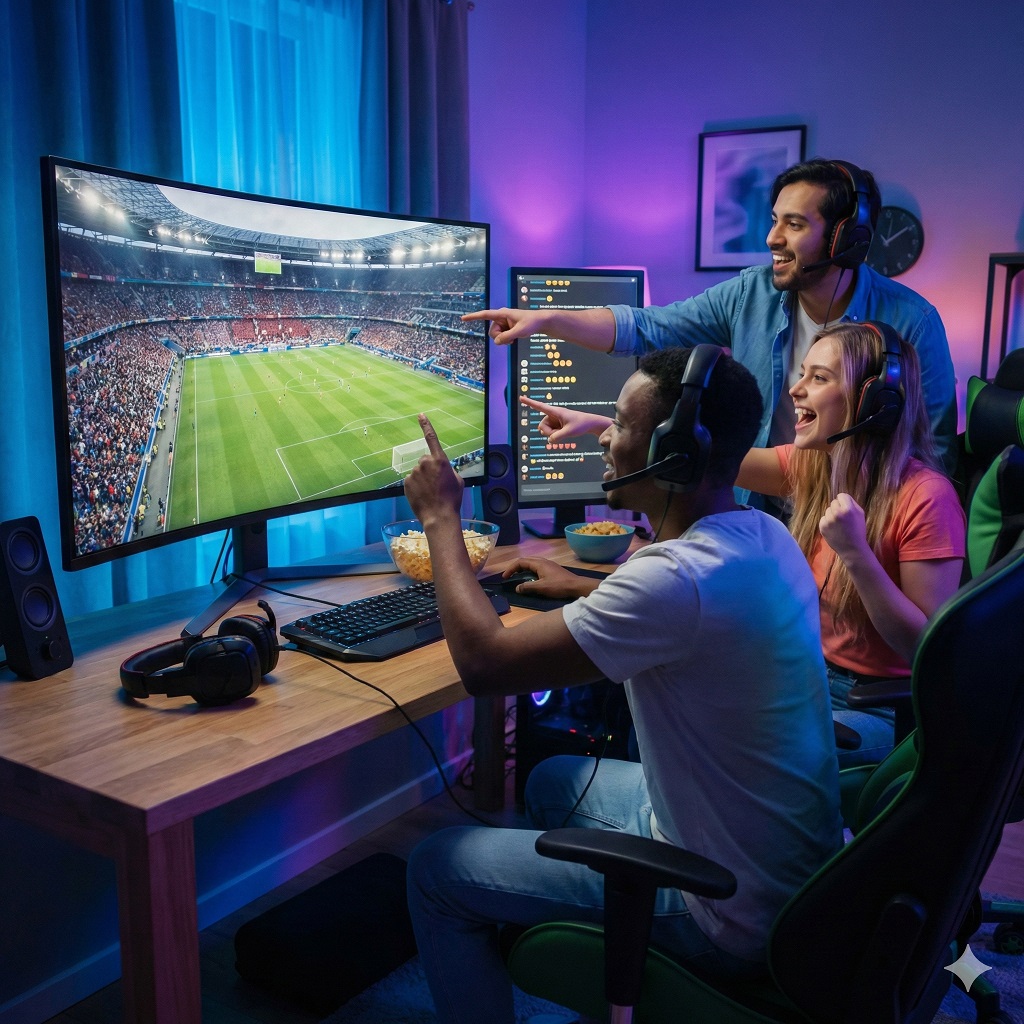
The “hangout” has moved from the bleachers to the streaming room. Driven by the explosive growth of platforms like Twitch, YouTube Gaming, and Kick, combined with the shifting viewing habits of Gen Z and Gen Alpha, sports and esports consumption is undergoing a radical transformation. Fans no longer just want to watch a broadcast; they want to participate in a communal, interactive, and highly personalized viewing experience.
Continues after advertising
This post explores the sociology, technology, and economics behind this massive shift, analyzing how the streaming room has usurped the stadium as the primary venue for modern fandom, and what this means for the future of entertainment.
I. The Anatomy of the Traditional Stadium: What We Left Behind
To understand the digital migration, we must first analyze what the physical stadium provided and why it was eventually deemed insufficient for the modern fan.
The traditional stadium experience was built on the concept of monolithic community. You were surrounded by people wearing the same colors, united by geography and loyalty. However, this model came with inherent friction:
- Geographic Limitations: If you lived in London but supported an NBA team in Los Angeles, your physical participation was virtually zero.
- Financial Barriers: The cost of tickets, parking, and concessions priced out millions of passionate fans.
- A Passive Experience: Despite the cheering, the traditional sports broadcast is a one-way street. The fan receives the broadcast, but the broadcast does not react to the fan. The commentators speak at the audience, not with them.
As internet infrastructure improved and globalized, the friction of the physical stadium became glaring. Fans began to seek out spaces where geography didn’t matter, where the barrier to entry was free, and most importantly, where their voices could actually impact the broadcast.
II. The Rise of the Co-Streamer: The New Play-by-Play
The most significant catalyst for the streaming room hangout is the phenomenon of co-streaming.
In the past, networks dictated the voice of the game. You listened to the assigned play-by-play announcer and color commentator, regardless of whether you liked them. Today, the power has shifted entirely to the creator economy.
Co-streaming involves an independent content creator broadcasting themselves watching and reacting to a live game. The viewer mutes the official broadcast (or watches a licensed feed directly on the creator’s channel) and listens to the streamer instead.
- Esports Pioneers: This started in esports. When major Valorant or League of Legends tournaments happen, hundreds of thousands of fans ignore the main broadcast to watch creators like Tarik or Caedrel. These streamers offer high-level analytical insight combined with the casual, unfiltered banter of a friend sitting on your couch.
- Traditional Sports Catch On: Traditional sports leagues are frantically trying to adapt. The NFL’s “Manningcast” (featuring Peyton and Eli Manning) was a direct response to the co-streaming trend—offering a more relaxed, conversational alternative to the stiff corporate broadcast. In Spain, streamer Ibai Llanos regularly draws millions of viewers to his Twitch channel to watch boxing events and even his own created football league (The Kings League), easily rivaling traditional television numbers.
The co-streamer replaces the detached professional announcer with a parasocial friend. The hangout is no longer with eighty thousand strangers in a stadium; it is with one charismatic host and a dedicated community of like-minded regulars.
III. The Architecture of the Digital Hangout: Chat as the Crowd
If the streamer is the new commentator, the chat interface is the new crowd. But the digital crowd is far more complex and organized than a physical one.
To the uninitiated, a fast-moving Twitch chat looks like pure chaos—a blur of text and cartoon faces. But to a native user, it is a highly legible emotional barometer. The chat serves several critical functions that mimic and enhance the stadium experience:
- Digital Chants (Emotes): Emotes (like PogChamp, LUL, or custom channel emotes) function exactly like stadium chants. When a player makes an incredible play, the chat doesn’t type sentences; they spam a specific image. This creates a visual wave of collective emotion that is instantly recognizable.
- Real-Time Polling and Sentiment: In a physical stadium, you can only gauge the crowd’s mood by the volume of their cheers or boos. In a streaming room, the streamer can run instant polls, ask questions, and read the room with pinpoint accuracy.
- Sub-Communities: Within a single broadcast of 100,000 people, viewers will often form smaller cliques, using Discord servers to chat via voice with a tight-knit group of friends while the main stream plays in the background. It is the digital equivalent of sitting in a private luxury box while still being part of the massive stadium crowd.
The streaming platform UI is specifically engineered to reduce the friction of socialization. It is an architecture designed not just for viewing, but for belonging.
IV. The Economics of the Streaming Room: Tipping the Host
The business model of fandom has also transformed. In the stadium era, revenue was generated through ticket sales, television rights, and physical merchandise. In the streaming room, we are seeing the rise of the Direct-to-Creator Economy.
Instead of buying a $15 beer from a faceless vendor, a fan will spend that $15 to “Subscribe” to the streamer or send a “Super Chat” (a highlighted, paid message). Why? Because of the interactive loop.
- Recognition: When a fan tips a streamer, their name appears on the screen, and the streamer thanks them live. For a brief moment, out of tens of thousands of viewers, that fan is acknowledged. This dopamine hit of recognition is something a physical stadium cannot offer.
- Influencing the Vibe: Paid messages often trigger specific sound alerts or visual effects on the stream. Fans are literally paying to alter the audiovisual environment of the hangout.
- Digital Status: Badges next to a username in chat indicate how long someone has been subscribed, or how much they have donated. It is a digital flex, the equivalent of wearing a vintage, signed jersey to a physical game.
This microtransaction economy turns the passive viewer into an active patron. They are not just consuming the hangout; they are financially sustaining the venue.
V. Interactive Fandom: When the Crowd Controls the Game
The evolution from stadium to streaming room is now crossing a new frontier: actual influence over the live event.
In a physical stadium, the most a crowd can do is make enough noise to cause a “false start” penalty in American football. In the digital realm, integration software is blurring the lines between player and spectator.
- Twitch Integrations: In many modern games, developers build API hooks directly for streaming platforms. The chat can vote to give the streamer extra health, spawn more enemies, or change the weather in the game. The crowd becomes a dynamic part of the game’s code.
- Fan-Controlled Leagues: We are seeing the birth of entirely new sports models, like Fan Controlled Football (FCF), where the viewers on Twitch literally vote on the offensive plays the real-life athletes will run on the field.
This level of interactivity fundamentally alters what it means to be a “fan.” You are no longer a spectator; you are a participant, a co-director of the entertainment. The hangout becomes a collaborative workspace.
VI. The Metaverse and VR: Bridging the Physical and Digital
While the streaming room dominates today, technology is already preparing for the next iteration: the synthesis of the physical stadium and the digital hangout through Virtual Reality (VR) and the Metaverse.
The ultimate goal is to offer the geographical freedom of a stream with the spatial presence of a stadium. Companies are heavily investing in volumetric video and VR broadcasting.
- Courtside in your Living Room: The NBA has experimented heavily with VR broadcasts. Fans can put on a headset and feel as though they are sitting courtside. When they turn their head, they see the rest of the virtual arena.
- Virtual Watch Parties: In platforms like VRChat or Meta Horizon Worlds, fans can gather as avatars in a virtual sports bar. They can high-five, throw virtual popcorn at the screen, and chat via spatial audio, recreating the exact physical sensations of a local sports bar hangout, but with friends logging in from Tokyo, London, and New York simultaneously.
As augmented reality (AR) glasses become mainstream, we will see the streaming room overlay the physical world. You might sit in your living room, but through your glasses, you see your friends’ avatars sitting on your couch, watching a holographic projection of the game on your coffee table.
Read More👉 Gaming Gear Essentials for Aspiring Pros
Conclusion: The Unchanging Core of Fandom
The physical stadium will never truly die. There is an undeniable, primal magic to breathing the same air as the athletes and feeling the concrete shake beneath your feet. But it is no longer the default mode of sports and esports consumption.
The shift to the streaming room represents a democratization of fandom. It has stripped away the barriers of geography and cost, replacing them with global, hyper-engaged digital communities. We have traded the roar of eighty thousand physical voices for the scrolling speed of eighty thousand chat messages.
Yet, beneath the UI overlays, the custom emotes, and the virtual reality headsets, the core human driver remains exactly the same as it was in the coliseums of ancient Rome. We just want to watch something incredible happen, look to the person next to us—whether they are sitting in the next seat over or logging in from across the globe—and say, “Did you just see that?”
The venue has changed. The human need to connect has not.